
NoFloods Hospital Flood Barrier System
A while back, the Alencon-Mamers Inter-municipal Hospital Center (CHICAM) in France faced a serious flood threat when the Sarthe River flooded.
The hospital is located close to the river and the local flood risk plan had identified the area as vulnerable to flooding.
The challenge was straightforward but serious:
How could the hospital protect its vulnerable areas quickly enough to keep operating if the river rose?
And just as importantly, the people responsible for deploying that protection needed to know exactly what to do.
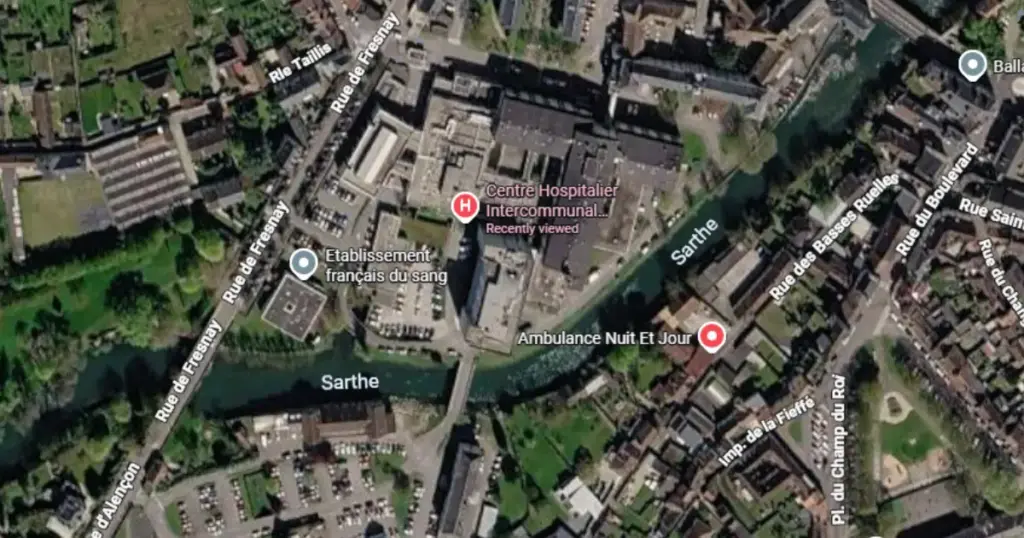
(Google Maps image showing the Alencon Hospital and its proximity to the Sarthe River)
The Solution: 200 Metres of NoFloods PRO TubeBarriers
Following the purchase of 200 metres of NoFloods PRO, the French Sécurité Civile carried out an on-site deployment simulation.
The purpose was to train the personnel involved and to make sure the barriers could be deployed as quickly as possible if flooding occurred.
| La Sécurité Civile is the civil defense agency of the French Government that among other things, is responsible for emergency response preparedness for national disasters such as flooding. We have been their preferred supplier of large-scale flood protection equipment for more than 10 years. The NoFloods TubeBarriers have been their solution of choice. |
The Result: The Hospital Was Successfully Protected During Flooding
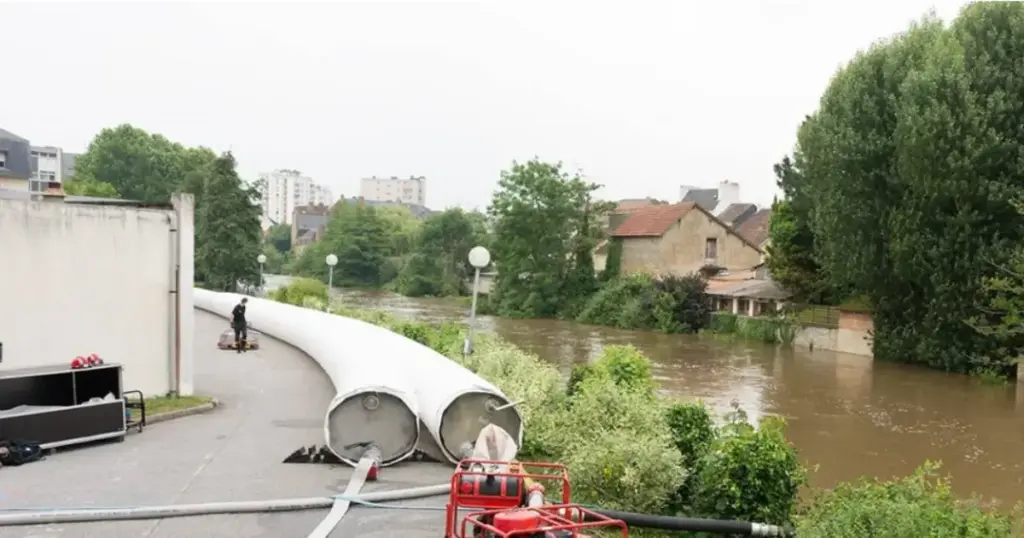
When the Sarthe River eventually flooded, the NoFloods PRO TubeBarriers were deployed to protect the Alencon Hospital.
The barriers kept the floodwater out, the hospital remained protected and evacuation of patients, staff and other personnel was avoided. Operations continued normally throughout the flood.
Here’s a video that shows the barriers in action:
(Turn on “subtitles/closed captions” to get the English translation)
And here are a couple of pictures:



Need a proven flood protection solution for your hospital or healthcare facility?
Get in touch for free advice on the right system based on your needs.
Preparation Made the Difference
The Alencon Hospital case is a good example of what practical flood preparedness looks like for hospitals and other healthcare facilities.
It’s not simply a matter of having flood barriers somewhere in storage. The vulnerable areas need to be identified, the right equipment needs to be available and the people responsible for deployment need to know exactly what to do.
At Alencon Hospital, that preparation was completed before the Sarthe River flooded.
When the water arrived, the protection was ready and so were the people responsible for deploying it.
That’s an important lesson other hospitals can learn from this case.
What Other Types of Flood Barriers Can Hospitals Use?
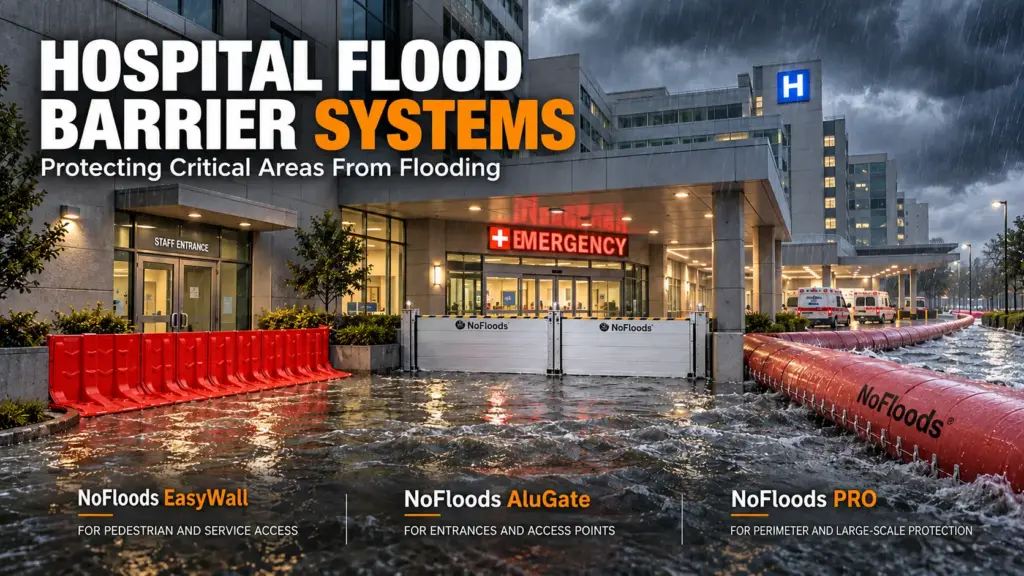
The NoFloods PRO TubeBarriers used to protect the Alencon Hospital are not the only option available to hospitals.
Different parts of a hospital can present very different challenges e.g. an emergency entrance, a loading bay, a basement doorway and a long perimeter may each require a different approach.
That’s why we offer several flood protection systems designed for different situations. The right choice depends on the area being protected, the expected flood level and how quickly protection needs to be put in place.
| Solution | Recommended Barrier | Best Suited For |
| Rapid temporary protection | NoFloods EasyWall | Entrances, access routes, perimeters and areas where protection needs to be deployed quickly without tools or heavy equipment |
| Wall-mounted protection | NoFloods FlexWall | Hospital entrances and areas where space is limited and a minimal footprint is important |
| Flexible temporary protection | NoFloods FlexGuard | Areas requiring adaptable layouts, temporary water diversion or perimeter protection without tools |
| Water-filled barriers | NoFloods PRO | Longer distances, perimeters, parking areas and larger sites |
| Flood panels/gates | NoFloods AluGate | Doors, entrances, garages, loading bays and other specific openings |
| Long-term modular protection | NoFloods AluBarrier | Longer-term protection around buildings, open perimeters and sites requiring a durable reusable system |
What Should Hospitals Consider When Choosing a Flood Barrier?
The Alencon Hospital case shows that choosing a flood barrier is about more than how much water it can hold back.
The barrier had to suit the site, be available when needed and be deployed quickly by trained personnel.
Every hospital has its own layout, flood risk and operational requirements. Before choosing a system, consider these practical suggestions:
- Protection Height
How high could floodwater realistically reach? Use available flood-risk information and site levels rather than guessing.
Different parts of the hospital may also require different protection heights.
- Barrier Length
Measure the areas that actually need protection. This could include entrances, loading docks, access roads, parking areas or sections of the perimeter.
- Deployment Time
How quickly can the barrier be put in place compared with the available flood warning time?
Consider the entire process, not just installation i.e. retrieving, transporting and positioning the equipment.
- Personnel and Training
Who will deploy the barrier and how many people are required?
Staff should know where the equipment is stored, who is responsible for deployment and how the system is installed and checked.
A practice deployment can expose problems before a real flood does.
- Storage
The equipment needs to be secure and accessible. It shouldn’t be stored somewhere that could flood or where staff can’t reach it quickly.
Think about: storage -> retrieval -> transport -> deployment.
- Access
The barrier shouldn’t prevent the hospital from functioning normally. Consider ambulance routes, emergency entrances, patient and staff access, deliveries and fire or emergency vehicle access.
- Flood Warning Time
Match the protection system to the time available. A manually deployed barrier may be suitable where there is reliable warning, while areas with little warning may require passive or automatic protection.
- Site Conditions
Check the actual ground where the barrier will be installed. Slopes, uneven surfaces, roads, kerbs, drains, doorways and changes in elevation can all affect how a system works.
- Maintenance and Testing
Flood barriers may sit unused for months or years. Regular inspection and practice deployments help ensure the equipment is ready and staff know what to do when it’s needed.
- Standards and Certification
Check the relevant standards, approvals and certification for the system and location. For a critical facility such as a hospital, appropriate engineering and technical advice should be part of the decision.
Choose for the Hospital
There isn’t one flood barrier specification that suits every hospital. The right choice depends on the flood risk, site conditions, areas requiring protection and how the system will actually be used.
The assessment should come before the barrier.
To help you with your assessment, here are some of the common areas in a hospital that may need protection from flooding.
Common Flood Risk Areas in a Hospital
- Emergency Department Entrances
These need to remain accessible during a flood. Protection must keep water out without blocking ambulances, emergency staff or patients.
- Ambulance Bays
Large and open ambulance areas can be difficult to protect. The barrier needs to allow emergency vehicles through and be quick enough to deploy within the available warning time.
- Main Entrances and Doorways
Hospitals have more openings than just the main entrance. Staff doors, service entrances and emergency exits can all provide a route for floodwater to enter.
- Loading Docks
Loading docks are often lower than surrounding ground and have large openings. They need protection without preventing essential deliveries from reaching the hospital.
- Basements
Basements may contain electrical equipment, pumps, HVAC systems, IT infrastructure and storage. Flooding here can affect much more than the basement itself.
- Electrical and Mechanical Rooms
Generators, switchgear, HVAC equipment and pumps can be critical to keeping a hospital running. If they’re at or below flood level, they should be part of the protection plan.
- Parking Areas and Garages
Surface parking can channel water towards the building while underground garages can allow water to reach lower parts of the facility.
- Elevators and Other Openings
Elevator shafts, ventilation openings, utility penetrations and other less obvious gaps can also provide routes for water.
Not every opening needs a barrier but vulnerable ones need to be identified.
- Drainage and Sewer Connections
Floodwater doesn’t always come through a door. Overloaded drainage systems and sewer backflow can bring water into a hospital through drains and other connections.
| Look at the Whole Hospital The key is to look at the building from the water’s perspective. Where is the lowest point? Which openings are vulnerable? What contains critical equipment? What must remain accessible during an emergency? |
Once you’ve identified the vulnerable areas, this checklist will help you work out what protection you need.
Hospital Flood Protection Checklist
These questions can help with your assessment and in choosing the right flood barrier system for your hospital.
1. Flood Risk
- What is the expected flood level?
- Where is the floodwater likely to come from?
- How quickly could it arrive?
- Which areas of the hospital are most vulnerable?
2. Barrier Requirements
- How many metres need protecting?
- What protection height is required?
- Which entrances, openings or perimeter sections need protection?
- Is temporary or permanent protection more appropriate?
3. Deployment
- How quickly can the barrier be deployed?
- How many people are required?
- Who is responsible for deployment?
- Has the deployment process been practised?
4. Storage
- Where will the barrier be stored?
- Can staff reach the equipment during a flood?
- Can it be transported quickly to the areas at risk?
5. Hospital Operations
- Can ambulances still access the facility?
- Can emergency entrances remain operational?
- Can staff and patients move safely around the protected areas?
- Can essential deliveries continue?
6. Critical Infrastructure
- What electrical equipment is vulnerable?
- Where are generators and mechanical systems located?
- Could floodwater reach IT infrastructure?
- Are there vulnerable medical or sterile areas?
- Could water enter through drains or sewer connections?
7. Training and Testing
- Have staff been trained to deploy the system?
- Has a full deployment exercise been carried out?
- Are responsibilities clearly defined?
- Is the system regularly tested and inspected?
- Has the flood response plan been updated as the hospital or site has changed?
If several of these questions don’t yet have clear answers, that’s probably a sign that the hospital needs to look at its overall flood protection plan before deciding which barrier to buy.
Protect Your Hospital From Flooding
Planning flood protection for a hospital or healthcare facility?
The Alencon Hospital case shows why good flood protection starts with preparation.
Before choosing a flood barrier, you need to understand the hospital’s requirements e.g. where can water enter? Which areas are most vulnerable? How much warning will you have? And what needs to remain operational if flooding occurs?
We can help assess your flood protection requirements and determine what type and quantity of deployable flood barriers may be appropriate for your situation.
Whether you’re protecting a hospital perimeter, emergency access route, entrance or another vulnerable area, the right solution starts with understanding the problem.
Get in touch with one of our flood protection specialists for free advice, including which system is right for your hospital.
Frequently Asked Questions About Hospital Flood Barriers
What is the best flood barrier for a hospital?
There isn’t one barrier that’s right for every hospital. The choice depends on the expected flood depth, warning time, area to be protected, site layout and required deployment time.
A site assessment should be done before choosing a system.
How do hospitals protect against flooding?
Hospitals can combine permanent and temporary flood barriers with drainage and backflow protection, protection for critical equipment and emergency flood procedures.
Staff training is also important where deployable barriers are used.
What areas of a hospital are most vulnerable to flooding?
Vulnerable areas can include:
- Emergency department entrances
- Ambulance bays
- Main entrances
- Loading docks
- Basements
- Parking garages
- Electrical and mechanical rooms
- Generator rooms
- IT infrastructure
- Elevator areas
- Ground-level openings
- Drainage and sewer connections
The exact risks will vary from one hospital to another, which is why a site-specific assessment is important.
How high should a hospital flood barrier be?
The required height depends on the expected flood level, site elevation and the level of protection required.
Flood-risk and engineering information should be used where available rather than simply choosing the highest barrier.
How quickly can a hospital flood barrier be deployed?
It depends on the barrier, site and amount of protection required.
Storage, access, available personnel and training can all affect deployment time, so a practice deployment is useful for establishing how long it will actually take.
Can hospital staff deploy temporary flood barriers?
Yes, many temporary systems can be deployed by trained hospital personnel.
Staff should know where the equipment is stored, who is responsible for deployment and how to install and check the system correctly.
How should flood barriers be stored at a hospital?
They should be stored securely, in an accessible location that isn’t itself vulnerable to flooding.
Retrieval and transport should also be included in deployment exercises so staff know how quickly the equipment can reach the area at risk.
Do hospitals need permanent or temporary flood protection?
It depends on the site and the flood risk. Some hospitals may use permanent protection for critical entrances and temporary barriers for larger areas, while others may use a combination of both.
How can hospitals protect critical equipment from flooding?
First, identify equipment and infrastructure that could be affected, such as generators, electrical systems, HVAC, pumps and IT equipment.
Protection may involve raising equipment, permanent or temporary barriers, improved drainage or a combination of measures.
How much does a hospital flood barrier cost?
There isn’t a single price because protection projects can vary considerably.
The cost can depend on:
- The length of protection required
- Required barrier height
- Type of flood protection
- Number of entrances or openings
- Site conditions
- Permanent versus temporary installation
- Storage requirements
- Installation and engineering requirements
For a meaningful estimate, the hospital should first determine what areas need protecting and what level of protection is required.
Get in touch with one of our flood protection specialists for free advice, including which system is right for your hospital.