
43 Interesting Facts About Flooding & Why They Matter
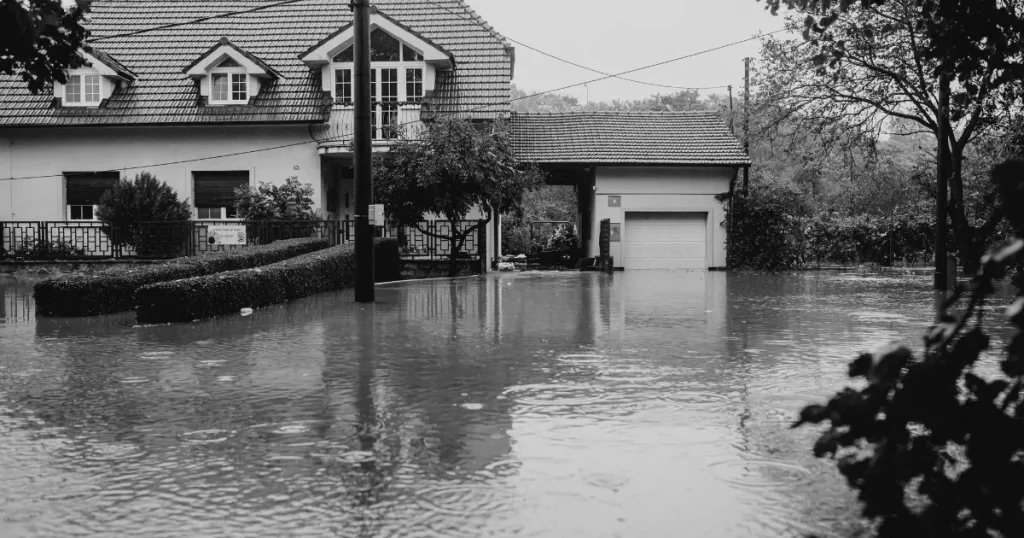
Flooding Is One of the World’s Most Common and Costly Natural Hazards
1. Floods account for 44% of recorded disasters worldwide
According to the World Meteorological Organization (WMO), floods account for about 44% of global disasters.
In the United States, NOAA describes floods as the most common and widespread of all weather-related natural disasters.
2. Flooding causes roughly $194 billion in direct economic losses each year.
Research from Harvard University estimates that flooding causes around $194 billion in direct economic losses globally each year across the agricultural, industrial and service sectors.
Why it matters:
Flooding affects communities worldwide and causes major disruption to homes, businesses, agriculture and essential services. The financial cost is also enormous.
How Much Moving Water Does It Take to Become Dangerous?
You don’t need deep floodwater for things to become dangerous. According to the National Weather Service, a couple of inches of moving water can have enough force to knock people over or move vehicles.
3. 6 inches of fast-moving water can knock an adult off their feet.
6 inches is only about 15 centimetres. Yet when water moves quickly, it can be powerful enough to knock a person over and make it hard to regain their footing.
4. Around 12 inches of rushing water can carry away most cars.
A vehicle’s weight doesn’t necessarily make it safe. Once water starts flowing around a car, the current can push it off the road and carry it downstream.
5. Two feet of rushing water can carry away SUVs and trucks.
A larger vehicle isn’t automatically safer. At this depth, the water’s force and buoyancy can move even heavier vehicles.
Why it matters:
The danger isn’t just the water you can see.
Floodwater can hide:
- Washed-out sections of road
- Sinkholes
- Debris
- Damaged bridges and culverts
The National Severe Storms Laboratory (NOAA) warns that you can’t reliably determine the condition of the road beneath floodwater. A road may have been washed away or contain a large sinkhole that is impossible to see.
That’s why the National Weather Service’s advice is simple: Turn Around, Don’t Drown.
How Quickly Can a Flash Flood Develop?
6. Flash floods can develop within minutes.
According to the National Severe Storms Laboratory (NOAA), flash floods can happen within minutes of the rainfall that causes them. That leaves little time to react, especially in areas where water rises quickly.
7. A creek only 6 inches deep can become a 10-foot-deep river in less than an hour.
This can happen in mountainous areas when a thunderstorm lingers over the watershed.
The National Severe Storms Laboratory uses this example to illustrate just how quickly water levels can change.
8. It doesn’t have to be raining where you are for a flash flood to reach you.
Rain may be falling several kilometres upstream while the sky above you is relatively calm.
That water can travel downstream and arrive later, turning a normally calm stream or dry channel into a dangerous torrent.
The National Weather Service warns that flooding can occur far away from where heavy rain initially fell.
9. Normally dry channels can become flood channels.
Dry washes, arroyos, canyons and small streams may look completely harmless most of the time, but intense rainfall can send water surging through them within minutes.
The National Weather Service notes that flash flooding can occur in normally tranquil streams and creeks.
Why it matters:
Flash flooding doesn’t always give you the visual warning you might expect.
By the time you can see the floodwater approaching, you may have very little time to get out of its path.
That’s what makes flash floods particularly dangerous. The problem isn’t just how much water arrives; it’s how quickly it does.
What Makes One Flood Worse Than Another?
It’s tempting to think that rainfall alone determines how severe a flood will be. But there are other factors.
10. Rainfall intensity matters.
Heavy rain falling in a short period can overwhelm the ground and drainage systems much faster than the same amount spread over several hours.
The National Weather Service identifies rainfall intensity and duration as two key elements that determine whether flooding develops.
11. The condition of the soil matters.
If the ground is already saturated, it has less capacity to absorb additional rainfall. This results in more water flowing across the surface and into streams, drains and low-lying areas.
12. Vegetation can reduce the amount of runoff.
According to the Food and Agriculture Organization of the United Nations (FAO), the amount of rain that infiltrates or runs off depends partly on the presence of vegetation.
During intense rainfall, trees, branches and leaves can slow the water as it falls, allowing more of it to infiltrate into the soil.
13. Topography can make flooding worse.
Water naturally moves downhill. Valleys, steep slopes and low-lying areas can concentrate runoff and channel large amounts of water into relatively small areas.
14. The speed of the storm matters.
A slow-moving storm can continue dropping rain over the same watershed for hours. Even if the rainfall isn’t particularly intense, the accumulated water can eventually overwhelm the area’s ability to drain it.
Why it matters:
There is no simple rule such as “X amount of rain always causes flooding.” Flood risk depends on what happens to the rainfall after it hits the ground:
That’s why flood forecasting is more complicated than simply looking at the day’s rainfall total.
The US Geological Survey (USGS) explains that runoff is affected by factors including soil characteristics, land cover, slope and the amount of water already in the ground.
In other words, the same storm can produce very different floods in two different places.
How Cities Can Make Flooding Worse
Flooding isn’t only a rural or riverside problem. Cities can make heavy rainfall harder for the landscape to absorb.
The main reason is simple – we replace absorbent ground with hard surfaces (e.g. concrete)
15. Urbanization can increase runoff by 2 to 6 times.
Research from the U.S. Geological Survey shows that urban development can substantially increase stormwater runoff to 2 to 6 times the volume that would occur on natural terrain.
Roads, roofs, parking lots and other impervious surfaces prevent rainfall from easily soaking into the ground.
16. Roads, roofs and parking lots can overwhelm drainage systems.
Instead of soaking into the soil, rainfall runs quickly across hard surfaces and into gutters, drains and channels.
When heavy rain arrives faster than the drainage system can handle, water can quickly accumulate on streets and in low-lying areas.
17. Urban flooding can happen without a river overflowing.
A city doesn’t need to sit beside a major river to experience serious flooding. Intense rainfall can overwhelm local drainage and create what is often called pluvial or surface-water flooding.
Why it matters:
This helps explain why a neighbourhood can flood even when there’s no river nearby.
So when assessing flood risk, looking only at nearby rivers isn’t enough. You also need to consider where rainwater goes once it hits the ground.
Floods Don’t Always Come From Heavy Rain
Rain is the obvious culprit when we think about flooding. But it isn’t the only one. Several different processes can push water out of its normal path.
18. Ice jams can cause flooding even without extreme rainfall.
When ice builds up and blocks part of a river, water can back up behind the blockage and rise rapidly.
The National Weather Service identifies ice jams as one of the causes of river flooding, particularly during periods of thaw.
19. Snowmelt can contribute to flooding.
A rapid thaw can send large amounts of meltwater into rivers and drainage systems. The risk can increase when snowmelt occurs at the same time as rainfall.
20. Dam or levee failures can produce sudden flooding.
Flooding doesn’t always build gradually. If a dam or levee fails, a large volume of stored water can be released in a short period.
The National Weather Service includes dam and levee failures among the potential causes of flooding.
21. Coastal flooding can happen without a river overflowing.
Along coastlines, flooding can result from storm surge, high tides, strong onshore winds and heavy rainfall.
A major storm can therefore create flooding from several directions at once.
Why it matters:
The source of the water affects how quickly it arrives, how deep it gets and how much warning people may have.
This distinction becomes particularly important when deciding how to prepare for or protect against flooding.
Wildfires Can Increase Flood Risk
A wildfire can change the way a landscape handles rain.
22. Wildfires can increase the risk of flash flooding.
A severe wildfire can destroy vegetation and alter the properties of the soil. With less vegetation to slow rainfall and less water able to soak into the ground, more rain can become surface runoff.
23. Burned areas can become more susceptible to debris flows.
When heavy rain falls on recently burned slopes, the increased runoff can carry ash, soil, rocks, trees and other debris downhill.
The result can be far more than ordinary surface flooding.
24. Increased flood risk can continue after the fire is gone.
According to the National Weather Service, areas affected by wildfire can remain vulnerable to flooding and debris flows for several years while vegetation and soil conditions recover.
Why it matters:
This creates an important connection between two hazards that are often considered separately:
Wildfire -> damaged vegetation and soil -> more runoff -> greater flood and debris-flow risk
So a community that has just experienced a major wildfire may need to think about flooding differently when the rainy season arrives.
The “100-Year Flood” Doesn’t Mean What Most People Think
The phrase “100-year flood” sounds like it should be easy to understand but it’s widely misunderstood.
25. A 100-year flood has a 1% chance of occurring in any given year.
A “100-year flood” doesn’t mean a flood of that size happens only once every 100 years.
The U.S. Geological Survey explains that hydrologists describe this as a 100-year recurrence interval. Based on historical rainfall and stream-stage data, it means there is a 1% chance in any given year that a flood of that magnitude will occur.
So, if a river reaches a particular height classified as a 100-year flood, it doesn’t mean the river won’t reach that height again for another century.
26. Two 100-year floods can happen in consecutive years.
There is no 99-year waiting period after a 100-year flood. Each year has its own 1% probability.
Why it matters:
Changes in land use, drainage, development, rainfall patterns and other factors can affect flood-frequency estimates over time.
So when you see or hear a “100-year flood,” think in terms of probability, not a countdown clock.
Many Are Exposed to Flood Risk
Flooding isn’t a problem limited to a handful of particularly vulnerable places. Its scale is global and the numbers are surprisingly large.
27. About 1.81 billion people, roughly 23% of the world’s population, are exposed to significant flood risk.
A World Bank analysis estimates that 1.81 billion people live in areas exposed to significant flood risk.
The analysis defines this as living in an area where floodwater could reach at least 0.15 metres during a 1-in-100-year flood.
28. About 89% of people exposed to significant flood risk live in low and middle income countries.
According to the World Bank, about 89% of people exposed to significant flood risk live in low and middle income countries.
Limited resources can make flood preparation, infrastructure improvements and recovery more difficult.
29. Around 170 million extremely poor people are exposed to significant flood risk.
The World Bank estimates that around 170 million people living in extreme poverty are exposed to significant flood risk.
For someone with very little financial security, losing a home, possessions, crops or income can be especially difficult to recover from.
Why it matters:
Flood risk isn’t just about the hazard itself. It’s also about who is exposed and how vulnerable they are when flooding occurs.
Flooding Can Actually Be Good for Nature
Flooding is usually considered destructive. But natural floods are also part of how many ecosystems work.
30. Floods can deposit nutrient-rich sediment on floodplains.
When a river spills over its banks, it can spread sediment across the surrounding floodplain. Over time, those deposits can help replenish soils and support vegetation.
31. Natural floodplains can store and slow floodwater.
Floodplains give excess water room to spread out. This can slow the flow of water and reduce the chances of flooding.
32. Wetlands can absorb and store excess water.
Wetlands act a little like natural sponges. They can hold water during wet periods and release it more gradually, while also providing habitat for plants and wildlife.
33. Flooding can create important habitat for wildlife.
Many wetland and floodplain ecosystems depend on periodic changes in water levels. Fish, birds, amphibians and other species can benefit from the habitats and food sources created by flooding.
Why it matters:
A flood isn’t automatically a disaster.
The problem arises when floodwater reaches places where people, buildings, roads and other valuable assets are exposed.
Flood Risk Doesn’t Stop at the Edge of a Flood Zone
A flood map can be useful but it shouldn’t be treated as a guarantee that property outside a high-risk area will never flood.
34. Nearly one-third of NFIP claims (29%) from 2014-2024 came from outside high-risk flood areas.
The Federal Emergency Management Agency’s FloodSmart uses this figure to illustrate an important point – that flood risk exists outside designated high-risk areas.
35. Flooding has affected 99% of U.S. counties over the past 20 years.
That doesn’t mean every part of those counties has the same level of risk. It does, however, show how geographically widespread flooding can be.
36. Flood maps can change as conditions change.
Flood risk isn’t cast in stone. Development, changes in drainage, erosion, weather patterns and new flood studies can all affect how an area is assessed.
Why it matters:
Being outside a high-risk flood zone can reduce your assessed risk but it shouldn’t be interpreted as having “no flood risk.”
How Much Damage Can a Small Amount of Floodwater Cause?
It doesn’t take several feet of water inside a building to create a major cleanup and repair problem.
37. Just 1 inch of floodwater can cause roughly $25,000 in damage to a home.
The National Flood Insurance Program uses this figure as an estimate to illustrate how expensive even relatively shallow flooding can be.
It’s an estimate, not a guarantee of what every home will cost to repair.
38. Floodwater can carry sewage, chemicals and other contaminants into buildings.
Floodwater isn’t exclusively rainwater. Depending on where it has travelled, it can pick up sewage, chemicals, bacteria and other contaminants.
The U.S. Environmental Protection Agency warns that floodwaters can carry biological and chemical contaminants indoors, potentially affecting people’s health and indoor air quality.
Why it matters
Flood damage doesn’t necessarily end when the water disappears. A relatively shallow flood can set off a chain of expensive problems.
And some of the costs aren’t immediately obvious. Flooring, drywall, insulation, electrical systems, furniture and other contents may all need to be inspected, cleaned, dried or replaced.
Flood Insurance Doesn’t Cover Everything and It Isn’t the Same as Flood Protection
Insurance can help with the financial consequences of flooding but it doesn’t prevent the water from getting into your property.
39. Standard U.S. homeowners insurance generally doesn’t cover flood damage.
According to the Federal Emergency Management Agency (FEMA), most homeowners insurance does not cover flood damage.
Flood insurance is a separate policy which can cover buildings, their contents or both.
40. National Flood Insurance Program policies normally have a 30-day waiting period.
The National Flood Insurance Program has a 30-day waiting period before coverage takes effect. There are 4 exceptions to this rule.
41. Flood insurance pays for certain losses, it doesn’t stop the floodwater.
Insurance is essentially a way of transferring some of the financial risk. It can help with recovery after a covered flood but it doesn’t protect a doorway, building, road or piece of equipment from the water itself.
Why it matters:
Flood insurance can provide a crucial financial safety net after a flood, but it’s important to understand what the policy covers, what it doesn’t and when coverage takes effect.
Knowing these details before a flood occurs can help you avoid unexpected gaps in coverage and make sure you have the right financial protection in place.
Flood Protection Can Prevent Enormous Amounts of Damage
Flood protection isn’t just about keeping water away from a building. Done well, it can reduce damage across entire communities and protect roads, hospitals, businesses, infrastructure and homes.
42. U.S. Army Corps of Engineers projects have prevented more than $1 trillion in flood damage.
According to the U.S. Army Corps of Engineers, its flood damage reduction projects, including levees and dikes, have prevented more than $1 trillion in river and coastal flood damage, within the last 35 years.
43. Flood protection reduces risk, it doesn’t eliminate it.
Even a substantial flood-control project can’t guarantee that flooding will never happen.
Extreme events can exceed the conditions a system was designed to handle and there is always some level of residual risk.
Why it matters:
Effective flood protection is about reducing risk and limiting damage when flooding occurs.
What These Flood Facts Mean for Protecting Your Property
These interesting facts about flooding make one thing clear – there isn’t one type of flood, so there isn’t one universal way to protect against it.
The right approach depends on factors such as:
- How deep the water could get
- How quickly it could arrive
- How much area needs protection
- Where the vulnerable entrances or openings are
- How much warning time you have
- Whether you need temporary or permanent protection
A solution that makes sense for protecting a home’s doorway may be completely different from what a construction site, commercial property or long perimeter needs.
That’s why it’s worth looking at the different approaches to flood protection before choosing a specific product or system.
For a practical overview, take a look at these 6 Solutions to Flooding. You’ll discover the different ways properties and sites can be protected, including approaches beyond simply using sandbags.
The Bigger Picture: Understanding Flood Risk
Flooding is far more complicated than simply having too much water.
A few inches of fast-moving water can be dangerous. A normally dry channel can become a raging torrent. A “100-year flood” can happen twice in a short span. And even properties outside high-risk flood zones can still flood.
The good news is that flood risk isn’t something we have to fear. Understanding where water comes from, how quickly it can move and what is exposed gives us a much better chance of reducing the damage.
If you’re unsure how to prepare your property or what type of flood protection might be appropriate, get in touch with our flood protection specialists for free guidance.
We’re happy to help you understand your options and what might work best for your situation; there’s no obligation on your part.