
The Main Types of Floods and How to Prepare for Each
Knowing the different types of floods isn’t just useful if you live in a flood-prone area. It can help you understand weather warnings, make better decisions during an emergency and choose the right flood protection measures for your home or business.
For example, a property near a river faces different risks than one along the coast or in the middle of a heavily built-up city.
Most flood experts group flooding into five main types i.e. flash floods, river (fluvial) floods, coastal floods, pluvial (surface water) floods and urban floods.
Each develops in its own way, affects different locations and requires a slightly different approach to preparedness and mitigation.
In this guide, we’ll explain what each type of flood is, what causes it, where it’s most likely to occur and why some floods become life-threatening within minutes while others build gradually over several days.
We’ll also clear up some common misconceptions such as the difference between pluvial flooding and urban flooding, and why storm surge is a cause of coastal flooding rather than a separate flood type.
By the end, you’ll have a clear understanding of the main types of floods, how they compare and which ones pose the greatest risks to people, property and infrastructure.
The 5 Main Types of Floods
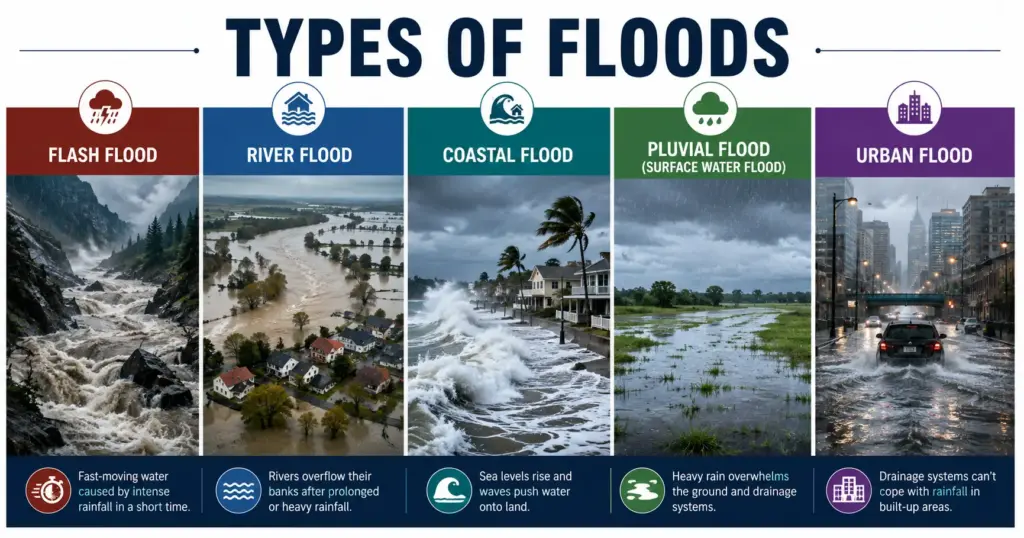
1. Flash Floods
Flash floods are the fastest-developing and often the most dangerous type of flood. Unlike river floods which can take hours or even days to develop, flash floods can occur within minutes or up to six hours after intense rainfall.
They happen when rain falls faster than the ground or drainage systems can absorb or carry it away, causing water to rush across the surface and quickly flood streams, roads and other low-lying areas.
Their greatest danger is the speed at which they develop. A small stream can become a raging torrent with little warning, while roads that appeared safe just moments earlier can disappear beneath fast-moving water.
This is why flash floods account for many flood-related deaths worldwide.
While intense rainfall is the most common cause, flash floods can also be triggered by:
- Intense or slow-moving thunderstorms.
- Dam or levee failures.
- Ice jams breaking apart.
- Burn scars left by wildfires, where the soil absorbs very little water.
Interestingly, the heavy rain doesn’t always fall where the flooding occurs. A storm many kilometres upstream can send a sudden surge of water downstream, flooding areas where the weather may seem relatively calm.
Where Do Flash Floods Occur?
Flash floods can happen almost anywhere but are most common in:
- Mountain valleys and steep terrain.
- Urban areas with extensive concrete and asphalt.
- Dry riverbeds and normally shallow streams.
- Narrow canyons and ravines.
- Areas recently affected by wildfires.
- Regions with poor or overwhelmed drainage systems.
Urban areas are especially vulnerable because roads, rooftops and other hard surfaces prevent rainwater from soaking into the ground. When storm drains can’t cope with the volume of water, streets can flood rapidly.
Why Are Flash Floods So Dangerous?
Flash floods leave very little time to react. Water levels can rise within minutes, trapping people in homes, vehicles or low-lying areas.
Fast-moving floodwater can:
- Sweep vehicles off roads
- Wash away bridges and sections of roadway
- Carry rocks, fallen trees and other debris
- Damage homes, businesses and critical infrastructure
- Erode riverbanks and hillsides
Many flood-related fatalities occur when people attempt to drive through flooded roads. Even shallow-looking water may hide a washed-out road beneath the surface.
How to Prepare for Flash Floods
Although flash floods can’t be prevented, you can reduce the risk by:
- Monitoring weather forecasts and official flood alerts
- Knowing whether your home, workplace or travel routes are in flash flood-prone areas
- Never driving, cycling or walking through moving floodwater
- Moving to higher ground immediately a flash flood warning is issued
- Keeping gutters, drains and culverts clear of debris
- Preparing an emergency kit in case you need to evacuate quickly
Because flash floods develop so quickly, acting on official warnings as early as possible can make all the difference.
2. River (Fluvial) Floods
River flooding, also known as fluvial flooding, occurs when a river, stream or creek can no longer contain the volume of water flowing through it, causing it to overflow its banks and spread into nearby floodplains and low-lying areas.
Unlike flash floods, river floods usually develop over several days following prolonged rainfall or rapid snowmelt.
Although this gives communities more time to prepare, river floods can affect vast areas and persist for days or even weeks.
River flooding is most commonly caused by:
- Prolonged or widespread rainfall across a river’s catchment
- Rapid snowmelt feeding rivers and streams
- Several storms passing over the same region
- Ice jams blocking the river’s flow
- Dam releases or in rare cases, dam failures.
It’s worth noting that heavy rainfall doesn’t have to occur where the flooding happens. Rain falling many kilometres upstream can cause rivers to overflow downstream, even after the local weather has improved.
Where Do River Floods Occur?
River flooding is most common in:
- River valleys
- Agricultural floodplains
- Low-lying communities near rivers
- Towns and cities built along waterways
- Areas downstream of large reservoirs or dams
Floodplains naturally store excess water during periods of high flow. The risk increases when homes, businesses, roads and other infrastructure are built within these flood-prone areas.
Why Are River Floods So Dangerous?
Although river floods develop more slowly than flash floods, they often affect much larger areas.
A single overflowing river can inundate:
- Thousands of homes
- Farms and crops
- Roads, railways and bridges
- Power, water and communication infrastructure
- Schools, hospitals and businesses.
Recovery can take weeks or even months as communities deal with saturated ground, damaged infrastructure, contaminated water supplies and weakened buildings.
How to Prepare for River Flooding
If you live near a river or stream, preparation should begin before floodwaters rise.
Some practical steps include:
- Check whether your property lies within a mapped floodplain
- Monitor river level forecasts during prolonged rainfall
- Move vehicles, machinery and valuables to higher ground when flood warnings are issued
- Have an evacuation plan and know the safest routes out of your area
- Avoid driving through flooded roads, even if the water appears shallow
- Consider installing flood protection if your property has a history of river flooding
Seasonal river flooding is a natural process that helps replenish wetlands, support wildlife and deposit nutrient-rich sediment.
The real challenge is protecting people and infrastructure built within areas that rivers naturally flood.
3. Coastal Floods
Coastal flooding occurs when seawater is pushed inland, flooding normally dry coastal areas.
In some regions, rising sea levels are also increasing the frequency and severity of coastal flooding.
The most common causes of coastal flooding include:
- Storm surges generated by tropical storms, hurricanes or cyclones
- Exceptionally high tides, sometimes called king tides
- Strong onshore winds that push seawater inland
- Large waves that overtop beaches, dunes or sea defences
Coastal flooding doesn’t always require heavy rainfall. A powerful offshore storm can push seawater inland, flooding homes, roads and businesses even when conditions on land appear relatively calm.
Where Do Coastal Floods Occur?
Locations most at risk include:
- Coastal towns and cities
- Low-lying beaches and waterfront communities
- Estuaries and river mouths
- Ports, marinas and harbours
- Barrier islands and coastal wetlands
Why Are Coastal Floods So Dangerous?
Coastal flooding can damage homes, businesses, roads and critical infrastructure, but storm surge, powerful waves and strong winds often make the impact even worse.
Saltwater adds another challenge by accelerating corrosion, damaging electrical systems, contaminating farmland and killing vegetation.
Severe coastal floods can also force large-scale evacuations and leave communities isolated until floodwaters recede and access routes are restored.
How to Prepare for Coastal Flooding
If you live or work near the coast, a few simple precautions can help reduce the impact of coastal flooding.
Some practical steps include:
- Monitor weather forecasts and coastal flood warnings
- Know your property’s elevation and whether it’s in a coastal flood zone
- Secure outdoor furniture, boats and other loose items before a storm
- Follow evacuation orders promptly
- Consider installing flood protection for doors, garages and other vulnerable entry points.
Preparing before a storm arrives gives you the best chance of protecting your property and staying safe.
4. Pluvial (Surface Water) Floods
Pluvial flooding, also known as surface water flooding, occurs when heavy rainfall overwhelms the ground and drainage systems, causing water to collect on the surface instead of flowing away.
Unlike river flooding, it doesn’t require a river, lake or stream to overflow. This means properties located far from any watercourse can still flood after an intense rainfall.
The most common causes of pluvial flooding include:
- Heavy or prolonged rainfall that exceeds the ground’s ability to absorb water
- Saturated or compacted soil that prevents infiltration
- Frozen ground that stops rainwater from soaking into the soil
- Drainage systems overwhelmed during intense storms
Pluvial flooding can occur in both rural and urban areas. While it’s often confused with urban flooding, the two aren’t the same.
Pluvial flooding describes how flooding occurs, while urban flooding is pluvial flooding that happens in towns and cities where roads, buildings and other paved surfaces increase surface runoff.
Where Do Pluvial Floods Occur?
Areas most at risk include:
- Low-lying land and natural depressions
- Fields and open countryside
- Residential neighbourhoods
- Car parks and paved areas
- Locations with poor or overwhelmed drainage
Why Are Pluvial Floods So Dangerous?
Because no overflowing river is involved, pluvial flooding often catches people by surprise.
Homes, businesses and roads far from rivers can still be flooded after intense rainfall, particularly if drainage systems can’t cope with the volume of water.
How to Prepare for Pluvial Flooding
You can reduce the risk of pluvial flooding by:
- Keeping gutters, drains and culverts clear of leaves and debris
- Improving drainage around your property where possible
- Avoiding the blockage of natural drainage paths
- Monitoring weather forecasts during periods of heavy rainfall
- Considering temporary flood barriers if your property has a history of surface water flooding
Understanding your property’s drainage and flood risk before heavy rain arrives can make a significant difference when surface water begins to accumulate.
5. Urban Floods
Urban flooding occurs when heavy rainfall overwhelms a city’s drainage system, causing water to accumulate on streets, car parks and around buildings.
It’s a type of surface water (pluvial) flooding that’s intensified by urban development.
Roads, pavements, rooftops and other hard surfaces prevent rainwater from soaking into the ground, increasing runoff and placing more pressure on storm drains and sewers.
The most common causes of urban flooding include:
- Intense or prolonged rainfall
- Overloaded or undersized stormwater drainage systems
- Blocked drains and culverts
- Large areas of concrete, asphalt and other impermeable surfaces
- Rapid urban development without adequate drainage infrastructure
Where Do Urban Floods Occur?
Areas most at risk include:
- City centres and residential neighbourhoods
- Roads, underpasses and tunnels.
- Shopping centres and industrial estates
- Car parks and transport hubs
- Low-lying streets with poor drainage
Why Are Urban Floods So Dangerous?
Flooded roads can bring traffic to a standstill, businesses may be forced to close and water entering buildings can damage property and electrical systems.
Floodwater may also hide hazards such as open manholes, damaged roads, electrical dangers and contaminated water from overflowing drains and sewers.
How to Prepare for Urban Flooding
You can reduce the impact of urban flooding by:
- Keeping drains, gutters and nearby stormwater inlets clear of debris
- Reporting blocked drains or damaged drainage infrastructure
- Storing valuable items above expected flood levels
- Avoiding driving through flooded streets
- Installing flood protection for doors, garages and other vulnerable entry points if your property is at risk.
As cities continue to expand, effective drainage, thoughtful planning and appropriate flood protection will become increasingly important in managing urban flood risk.
Comparison of the Five Main Types of Floods
| Flood Type | Main Cause | Typical Onset | Typical Duration | Common Locations | Biggest Danger |
| Flash Flood | Intense rainfall, dam or levee failures, ice jams | Minutes to 6 hours | Hours to a few days | Mountain valleys, urban areas, dry riverbeds, steep terrain | Fast-moving water with little warning |
| River (Fluvial) Flood | Prolonged rainfall, snowmelt, ice jams | Days to weeks | Days to weeks | Rivers, streams, floodplains | Large-scale inundation over wide areas |
| Coastal Flood | Storm surge, high tides, strong onshore winds | Hours to days | Hours to several days | Coastlines, estuaries, tidal rivers | Seawater, powerful waves and storm damage |
| Pluvial (Surface Water) Flood | Heavy rainfall exceeding the ground’s or drainage system’s capacity | Minutes to hours | Hours to several days | Low-lying land, fields, residential areas | Flooding away from rivers and streams |
| Urban Flood | Overwhelmed drainage systems and impermeable surfaces | Minutes to hours | Hours to a few days | Cities, roads, commercial areas | Property damage and major transport disruption |
Other Types of Floods
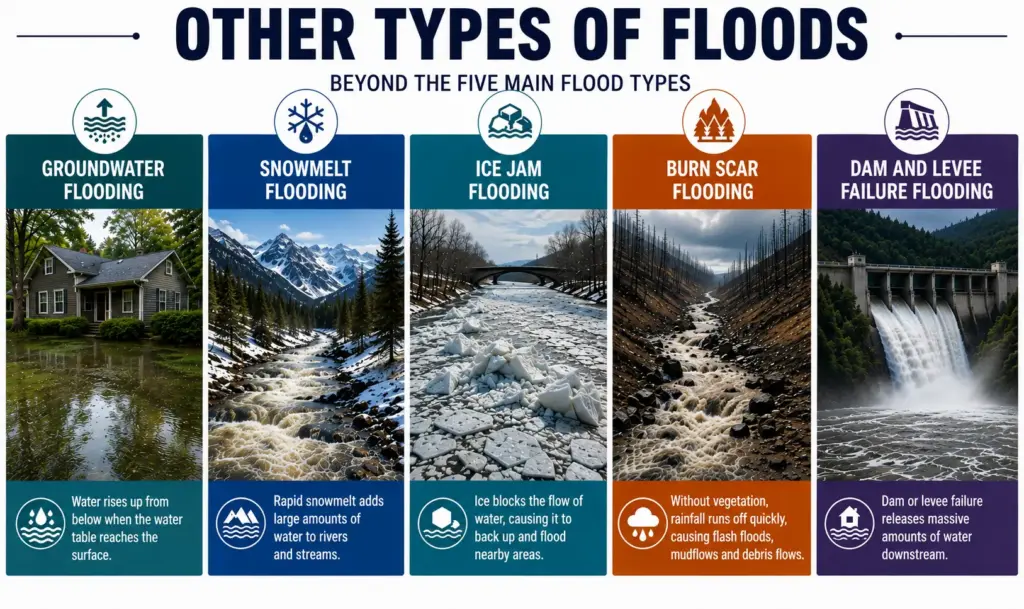
While the five flood types we’ve covered are the most widely recognized, they’re not the only ones.
Depending on the climate, geography and local conditions, you may also come across the following types of flooding.
- Groundwater Flooding
Groundwater flooding occurs when prolonged rainfall causes the water table to rise above the ground surface.
Instead of water flowing from a river or collecting after heavy rain, it seeps up from below. This type of flooding often develops slowly and can persist for weeks, particularly in low-lying areas with poor natural drainage.
- Snowmelt Flooding
Snowmelt flooding happens when large amounts of snow melt over a short period, adding significant volumes of water to rivers and streams.
It’s most common during spring or after a sudden temperature rise. It can become severe if heavy rainfall occurs at the same time.
- Ice Jam Flooding
In colder regions, large pieces of river ice can accumulate and block the natural flow of water. As water backs up behind the blockage, nearby land may flood.
If the ice jam suddenly breaks apart, it can also release a powerful surge of water downstream, sometimes triggering flash flooding.
- Burn Scar Flooding
Areas recently affected by wildfires are especially vulnerable to flooding. Without vegetation to absorb rainfall, water flows rapidly across the ground instead of soaking into the soil.
Even a relatively small amount of rain can trigger flash floods, mudflows and debris flows in these areas.
- Dam and Levee Failure Flooding
Although uncommon, the failure of a dam or levee can release enormous volumes of water in a very short time.
The resulting floods often behave like flash floods, moving quickly and causing widespread damage downstream.
For this reason, communities located below large dams typically have emergency evacuation plans in place.
Choosing the Right Flood Barrier for Different Types of Floods
Once you know the type of flooding you’re trying to protect against, choosing a flood barrier becomes much easier.
A homeowner looking to protect a single doorway has very different needs from a municipality defending kilometres of riverbank or a business safeguarding a warehouse.
The type of flood, expected water depth, deployment time and the area you need to protect all play a role in selecting the right solution.
Here at NoFloods, we have flood protection solutions for homeowners, businesses, emergency responders and municipalities.
Whether you’re protecting a doorway, a warehouse, critical infrastructure or a long stretch of riverbank, there’s a solution designed for that specific flood risk.
The table below provides a general guide to selecting a suitable flood barrier based on the type of flooding you’re most likely to encounter.
| Flood Type | Recommended NoFloods Solution | Best Suited For |
| Flash Floods | NoFloods PRO (for professional use e.g. municipalities), EasyWall, AluGate Note: Best to be deployed where the speed of the floodwater has decreased. | Rapid emergency response, protecting homes, commercial buildings and critical entrances before fast-rising water arrives. |
| River (Fluvial) Floods | NoFloods PRO, EasyWall, AluBarrier, SandGuard | Long stretches of riverbank, communities, utilities, industrial sites and floodplain protection. |
| Coastal Floods | NoFloods PRO, EasyWall, AluGate, AluBarrier | Homes, waterfront buildings, utilities and critical infrastructure exposed to storm surge and wave action. |
| Pluvial (Surface Water) Floods | FlexWall, FlexGuard, EasyWall, AluGate | Doorways, garages, loading bays, basements, underground entrances and individual buildings affected by surface water |
| Urban Floods | NoFloods PRO, NoFloods URBAN, FlexGuard, EasyWall, FlexWall, AluGate | Streets, commercial properties, residential developments, public buildings and urban infrastructure. |
Before making a decision, it’s worth asking yourself a few practical questions:
- What type of flooding am I trying to protect against? Different floods behave differently, so the barrier should match the risk.
- How high could the water rise? Choose a system that’s designed for the expected flood depth.
- How much area needs protecting? A single doorway requires a different solution from an entire street, industrial site or riverbank.
- Will the barrier be temporary or permanent? Some systems are deployed only when flooding is expected, while others remain in place year round.
- How quickly does it need to be installed? In a fast-moving emergency, rapid deployment can make all the difference.
- Who will install it? Some barriers are designed for homeowners and businesses, while others are better suited to trained emergency response teams.
The best flood barrier isn’t necessarily the biggest or the most expensive; it’s the one that’s designed for your specific flood risk.
Taking the time to understand how flooding affects your property is the first step towards choosing a solution that provides reliable protection when it matters most
Be Prepared for Every Type of Flood
Not all floods are the same and neither are the solutions used to protect against them.
Whether you’re dealing with a fast-moving flash flood, a slowly rising river, coastal storm surge or surface water flooding after heavy rain, understanding the type of flood you’re facing is the first step towards reducing the risk to your home, business or community.
The good news is that flood damage isn’t inevitable. With the right planning, timely action and a flood protection system that’s suited to your specific risk, it’s possible to significantly reduce the impact of flooding and protect what matters most.
If you’re unsure which flood barrier is right for your property or project, we’re here to help. Our team can assess your flood risk, discuss your requirements and recommend the most suitable solution from the NoFloods range, whether you need temporary protection for an approaching storm or a long-term system for ongoing flood resilience.
Get in touch with us today to discuss your flood protection needs. We’ll help you find a solution that’s practical, reliable and tailored to your specific flood risk.
Frequently Asked Questions
1. What are the five main types of floods?
The five main types of floods are flash floods, river (fluvial) floods, coastal floods, pluvial (surface water) floods and urban floods.
Each type has different causes, develops at a different speed and affects different environments.
2. Which type of flood is the most dangerous?
Flash floods are generally considered the most dangerous because they can develop within minutes, leaving little time to react.
Their fast-moving water can sweep away vehicles, damage buildings and pose a serious threat to life.
3. What’s the difference between a flash flood and a river flood?
The biggest difference is how quickly they develop. Flash floods occur rapidly after intense rainfall or a sudden release of water.
In contrast, river floods usually develop over several days as rivers gradually rise above their banks following prolonged rainfall or snowmelt.
4. Is pluvial flooding the same as urban flooding?
Not exactly. Pluvial flooding occurs when heavy rainfall overwhelms the ground or drainage systems, causing water to collect on the surface.
Urban flooding is a type of pluvial flooding that occurs in towns and cities, where roads, buildings and other hard surfaces prevent water from soaking into the ground.
5. Can flooding happen without a river overflowing?
Yes. Coastal flooding, pluvial flooding and urban flooding can all occur without a river or stream overflowing.
Heavy rainfall, storm surge or overwhelmed drainage systems can all cause flooding in areas far from rivers.
6. What causes coastal flooding?
Coastal flooding is mainly caused by storm surge, high tides, strong onshore winds and large waves.
Rising sea levels are also increasing the frequency and severity of coastal flooding in many parts of the world.
7. How can I protect my property from flooding?
Start by understanding the type of flooding your property is most likely to experience. Keeping drains clear, following flood warnings, improving drainage and installing an appropriate flood barrier can all help reduce the risk of flood damage.
8. Which flood barrier is best for my property?
There’s no single barrier that’s right for every situation. The best choice depends on several factors including the type of flood, expected water depth, the area you need to protect and whether you’re looking for a temporary or permanent solution.
Matching the flood barrier to your specific flood risk will usually provide the most effective protection.
Get in touch with us today to discuss your flood protection needs. We’ll help you find a solution that matches your specific flood risk.