
Rapid Deployment Flood Barrier Strengthens Czech Response
A rapid deployment flood barrier is a temporary flood protection system designed to be installed quickly when floodwaters threaten communities, infrastructure or property.
Unlike traditional sandbag defenses, these systems can be deployed in a fraction of the time, helping emergency responders act faster when every minute counts.
To strengthen its ability to respond to flood emergencies, the Rescue Unit of the Fire Rescue Service of the Czech Republic (HZS CR) recently acquired three flood protection containers equipped with the NoFloods PRO rapid deployment flood barrier system.
Together, the containers provide 500 meters of reusable flood protection that can be deployed quickly to help safeguard communities, critical infrastructure and other vulnerable assets when floodwaters strike.
To ensure the firefighters could deploy the system safely and effectively under real-world conditions, a specialised training program was conducted from May 19th to 21st, 2026.
The three-day course combined classroom instruction with hands-on field exercises, allowing participants to gain practical experience with every stage of the deployment process, from equipment preparation and barrier installation to drainage, dismantling and storage.
This case study examines how the training was carried out, what firefighters learned in the field and why rapid deployment flood barriers are becoming an increasingly important part of modern flood response and resilience strategies.
Czech Firefighters Learn to Deploy Rapid Deployment Flood Barriers
Acquiring new flood protection equipment is only the first step. To be effective during an emergency, responders must understand exactly how the system works and be confident using it under real-world conditions.
That’s why the Rescue Unit of the Fire Rescue Service of the Czech Republic dedicated three days to hands-on training focused on the deployment, operation, removal and storage of the NoFloods PRO rapid deployment flood barrier system.
Classroom Training and Equipment Familiarization
The training began in Hlučín, where firefighters were introduced to the complete flood protection system setup.
Before anyone stepped into the field, participants needed a clear understanding of the equipment they would be working with and the role each component plays during a flood response operation.
Under the guidance of a NoFloods representative, firefighters were taken through the system step by step. The sessions covered everything from the layout of the containers to the individual components used during deployment.
Representatives from Luing Pyrex (our Czech partner) were also present throughout the training, helping ensure that information was communicated clearly and that participants could ask questions whenever needed.
Learning Deployment Procedures
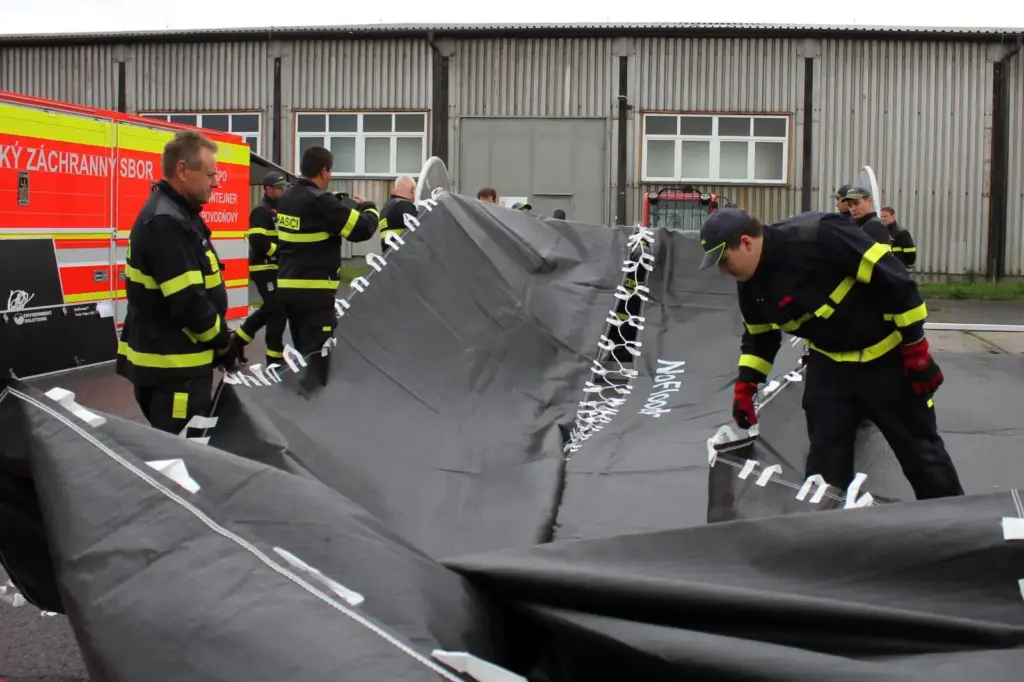
Once firefighters had a solid understanding of the equipment, attention shifted to deployment procedures. Participants learned the correct sequence for preparing, assembling, securing and filling the barriers.
While the system is designed for rapid deployment, effective operation still depends on following proven procedures and ensuring each stage is completed correctly.
The training focused not only on what to do but also on why each step matters. Understanding the reasoning behind the deployment process helps responders adapt more effectively when conditions in the field don’t unfold as expected.
Inspection and Maintenance Requirements
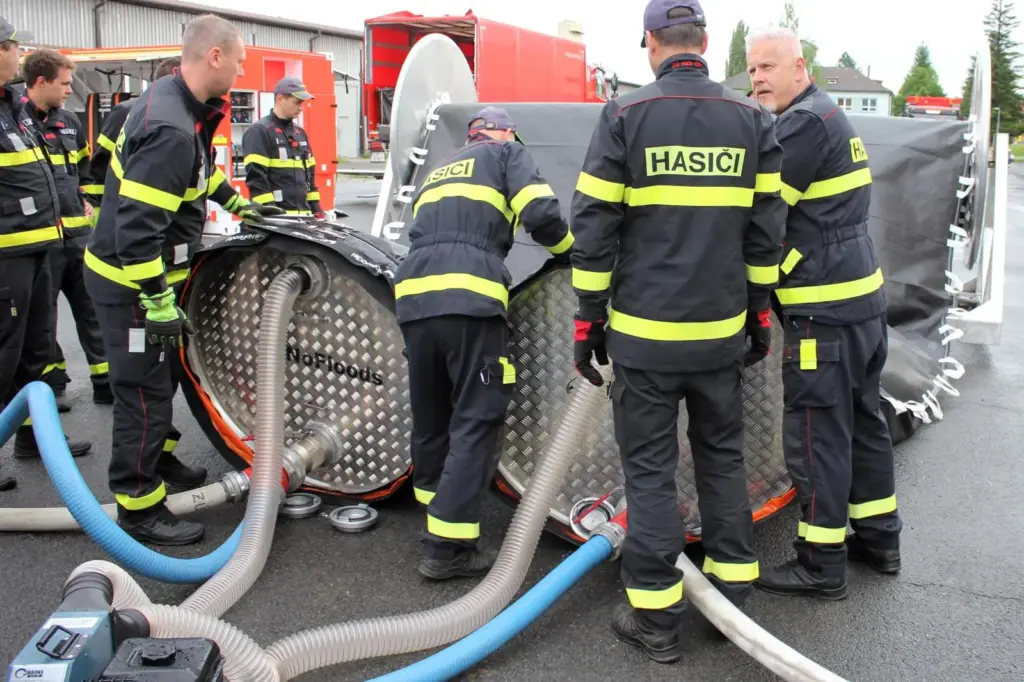
Though flood barriers are typically deployed during emergencies, they must remain ready for use at a moment’s notice. This means regular inspections and proper maintenance are essential.
Firefighters learned how to assess equipment condition, identify potential issues and carry out the checks required before and after deployment.
While these tasks may seem routine, they’re critical for ensuring the system performs reliably when it’s needed.
By the end of the classroom portion of the course, participants had developed a thorough understanding of the equipment, deployment procedures and maintenance requirements.
The next step was putting that knowledge into practice during a live field exercise.
Practical Field Exercise Along the Ostravice River
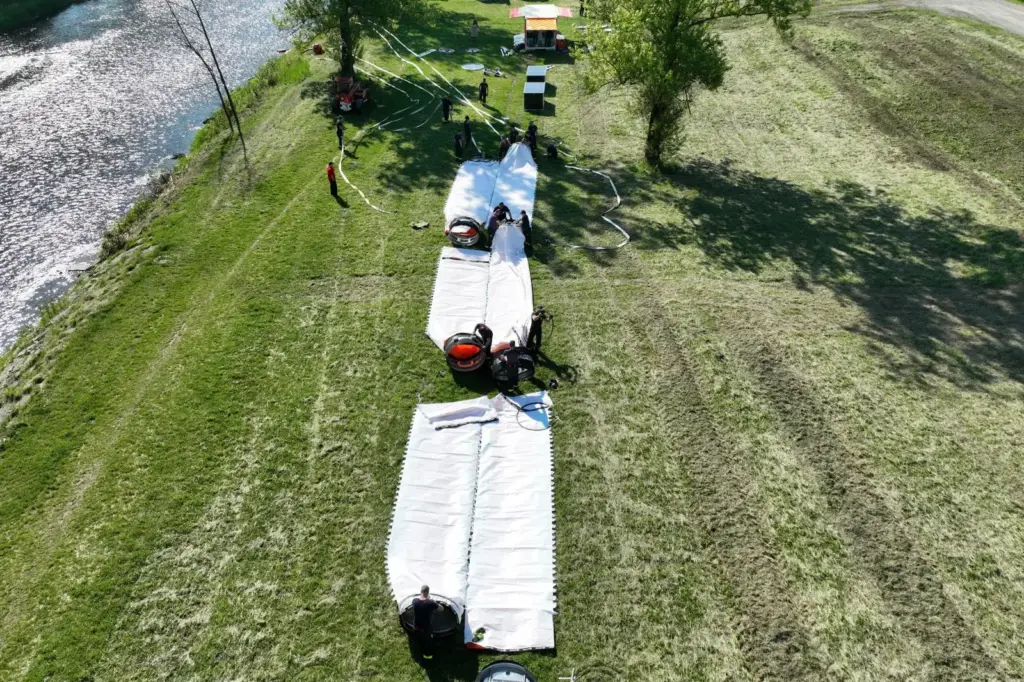
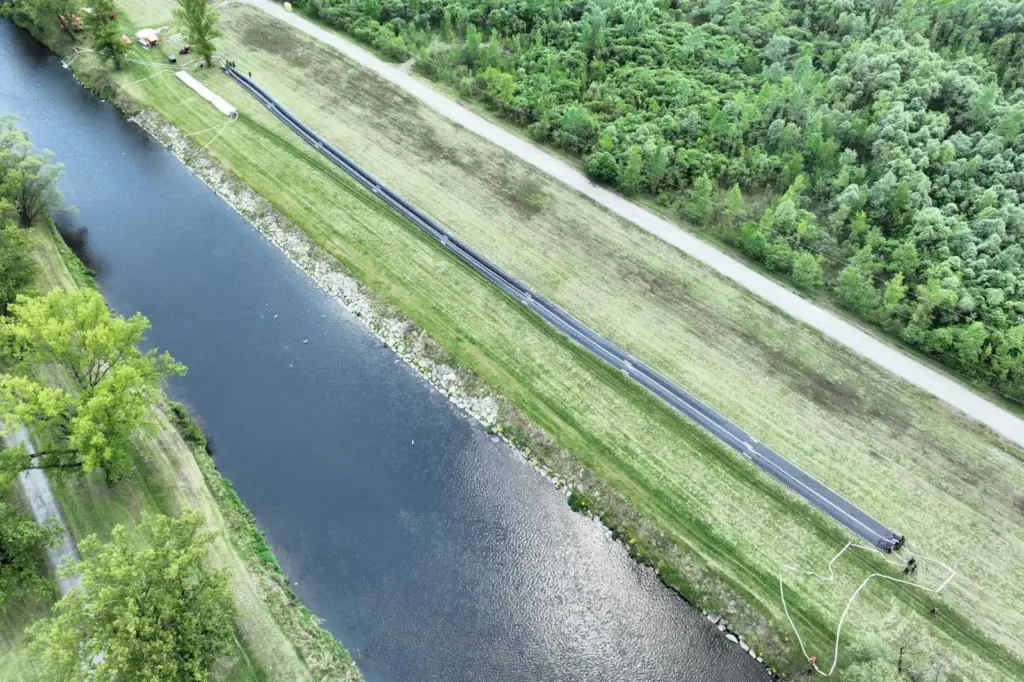
On May 20th, the firefighters travelled to the banks of the Ostravice River in the municipality of Vratimov, where they would deploy the NoFloods PRO system under realistic conditions.
While classroom instruction provides the foundation, flood response is ultimately a hands-on activity.
Equipment must be transported, assembled, tested, deployed and recovered efficiently, often under challenging circumstances.
The practical exercise allowed participants to have a firsthand experience of each stage of the process.
Equipment Unloading and Site Preparation
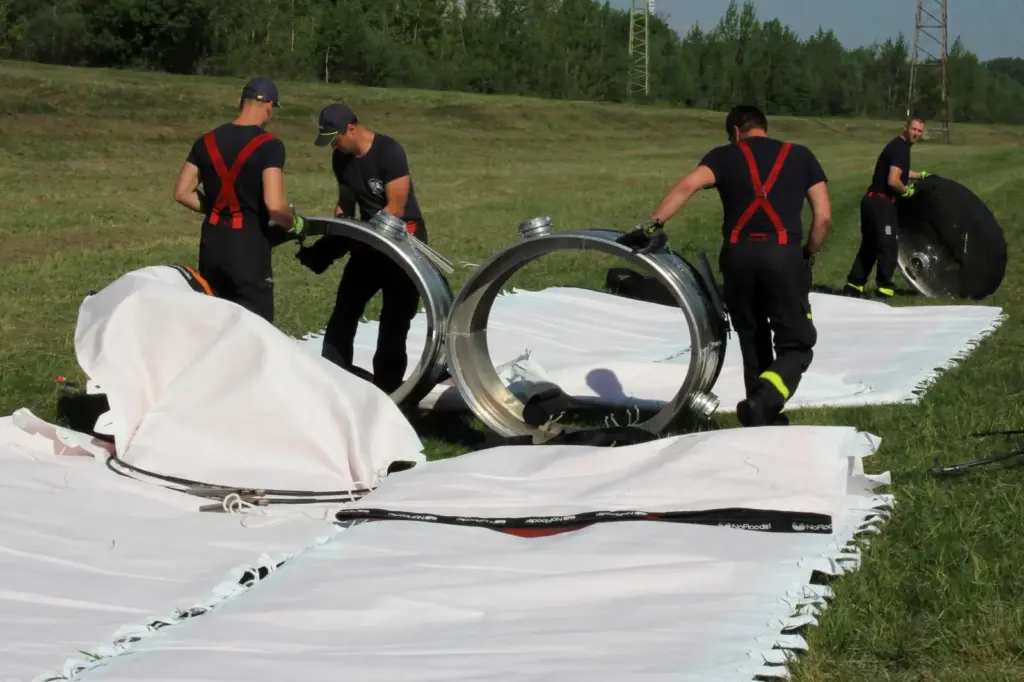
The exercise began with the firefighters unloading the flood protection equipment and preparing the deployment area.
Individual barrier sections, hoses, connectors and supporting equipment were positioned and organized.
At first, this might seem like a routine task. In reality, proper preparation can have a significant impact on the speed and efficiency of a deployment.
With the equipment staged and the work area prepared, the firefighters moved on to assembling the rapid deployment barrier system.
Airtightness Testing and Tube Preparation
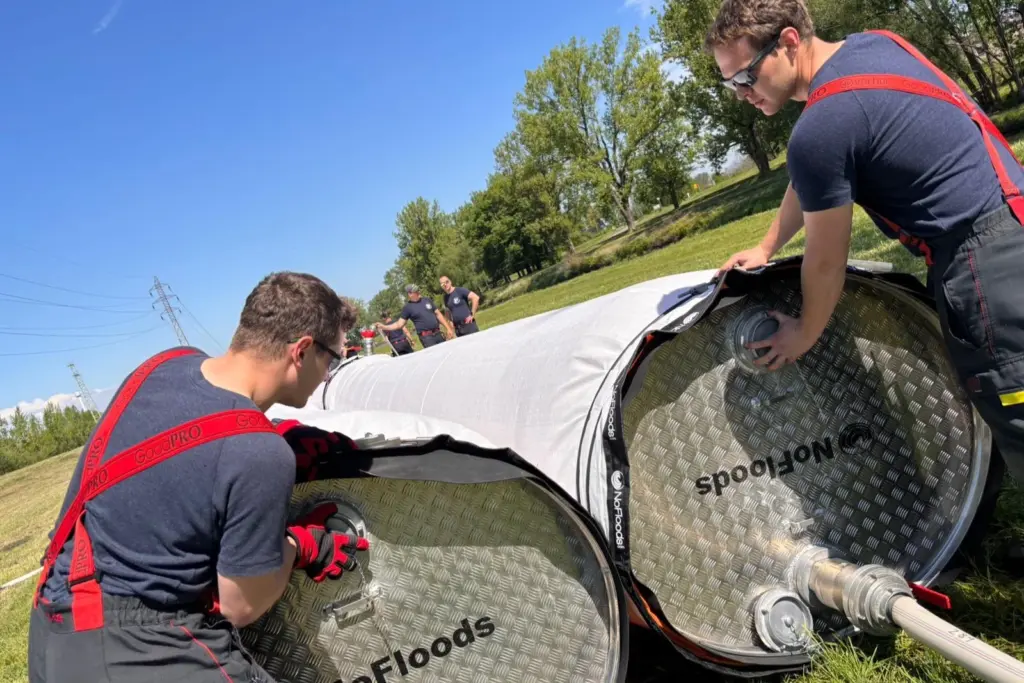
Before water could be put into the system, each tube had to be prepared and inspected. Firefighters sealed the barrier sections and filled them with air to test their airtightness.
This step serves a couple of important purposes:
- Any issues with seals or connections can be identified long before the barriers are needed for flood protection
- It helps to unfold the inner membrane properly
- It gives the barrier its shape
It’s a simple process but one that helps ensure the system performs as expected when deployed in real-world conditions.
A flood defense line using 30-meter barrier sections was prepared.
Once the inspections were completed and all components were confirmed to be functioning correctly, the tubes were arranged into their intended position and prepared for filling.
Water Filling
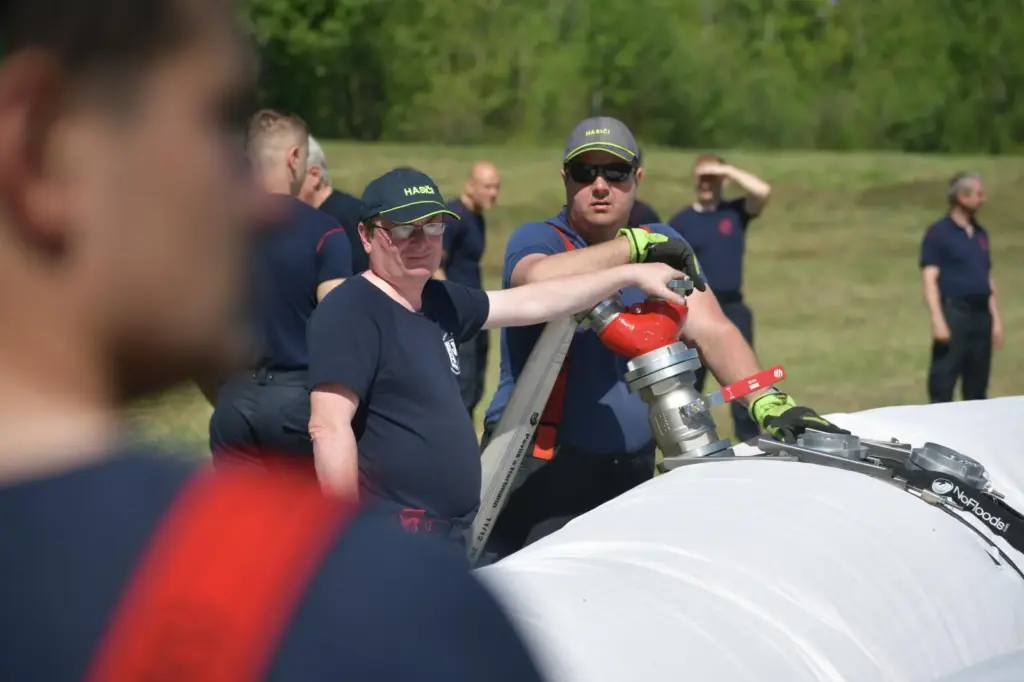
With the barriers in position, the firefighters laid hose lines and began filling the system with water.
The process was carried out gradually, allowing participants to observe how the barrier takes shape and stabilizes as water levels increase.
The barriers were filled to an operational height of approximately one meter, creating a realistic flood protection line similar to what firefighters might construct during an actual emergency.
Building a Stable Modular Barrier Configuration
The NoFloods PRO system is designed to be installed using a tandem configuration, where two tubes are connected together to form a single protective barrier.
This arrangement increases stability and helps the system maintain its position when exposed to floodwater pressure.
As firefighters completed the installation, they were able to see how the individual components worked together to create a continuous flood defense line.
It’s one thing to understand a modular barrier system in a classroom setting but seeing it take shape along a riverbank is something entirely different.
By this point, participants had successfully assembled, configured and filled the rapid flood protection system, gaining valuable experience that will help them respond more effectively when future flood events threaten communities and critical infrastructure.
Practicing Complete Deployment and Recovery Operations
Installing a flood barrier is only one part of the job. Once floodwaters recede and the immediate danger has passed, emergency responders must be able to remove the system efficiently and store it for future use.
That’s why the training focused on the complete operational lifecycle of the NoFloods PRO system, not just its deployment.
This part of the exercise gave firefighters valuable experience with the procedures that take place after a flood response operation.
Drainage & Removal
Once the simulated flood protection operation was complete, the firefighters began the drainage process. Water was carefully released from the barriers, allowing the tubes to return to their original lightweight state.
This stage highlighted one of the practical advantages of water-filled flood barriers.
Unlike traditional sandbags that often require a lot of labour to remove and dispose of after a flood, the NoFloods PRO system can be emptied directly on-site, simplifying the recovery process.
The barriers can be removed quickly using a small team and a hydraulic winch compatible with standard handling equipment. This significantly reduces the time and resources required during the recovery phase.
For emergency services and affected communities, that speed can make a real difference. Instead of spending days or even weeks removing temporary flood defenses, areas can often return to normal operations within hours, allowing recovery efforts to begin sooner and resources to be redirected where they are needed most.
What surprised some participants was how quickly the system could be removed once empty.
A barrier that had formed a substantial flood protection line along the riverbank could now be handled by a relatively small team.
This capability can be particularly valuable after a flood event when personnel may already be committed to other recovery and emergency response activities.
Inspection & Storage for Future Deployments
The final stage focused on inspection, packing and preparation for storage. Firefighters learned how to check barrier components, identify any signs of wear and ensure that all equipment was returned to the containers in a deployment-ready condition.
It’s easy to think of flood protection as something that begins when floodwaters arrive. In reality, readiness starts long before an emergency occurs. Equipment that is properly maintained and stored can be deployed far more efficiently when time is limited.
By practicing deployment, drainage, dismantling and storage as part of a single exercise, the firefighters gained a complete understanding of how the NoFloods PRO rapid deployment flood barrier system functions throughout its entire operational lifecycle.
That knowledge will help ensure the equipment remains ready to support rapid flood response efforts whenever it is needed.
Enhanced Flood Preparedness and Rapid Response Capability
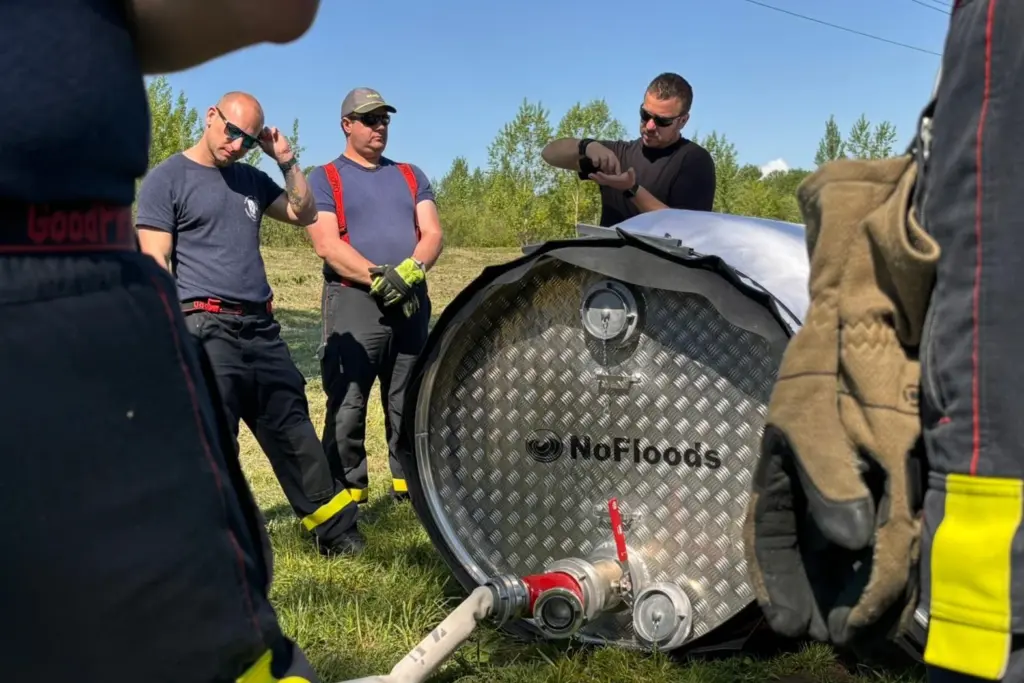
The training successfully prepared the firefighters to deploy, operate, remove and maintain the NoFloods PRO rapid deployment barrier system under real-world conditions.
Through a combination of classroom instruction and practical field exercises, participants gained hands-on experience with every stage of the deployment process.
The firefighters are now better equipped to establish flood protection quickly when flash floods, overflowing rivers or other emergencies threaten communities and critical infrastructure.
The training also demonstrated the advantages of a modular flood protection system. The barriers can be adapted to different deployment scenarios, providing flexible protection for municipalities, roads, utilities, industrial facilities and commercial properties.
Compared to traditional sandbags, the system requires less labour during deployment and removal.
What also became apparent during the exercise was the importance of coordination. Even with a rapidly deployable flood barrier system, successful installation relies on teamwork, communication and attention to detail.
Proven Performance Beyond Training
While the training provided valuable hands-on experience, the NoFloods PRO system has already demonstrated its effectiveness during real flood events e.g. it was deployed in the Ostrava region during the 2024 floods.
Its successful use in actual emergencies highlights the benefits of rapid deployment, modularity and reusability.
For emergency responders, that’s important. Training builds confidence but proven field performance provides additional assurance that the system can deliver when flooding occurs.
As flood risks continue to evolve, solutions that combine rapid flood response with long-term reliability will play an increasingly important role in strengthening flood resilience and supporting emergency operations during major flooding events.
How Rapid Deployment Flood Barriers Strengthen Flood Resilience
The Czech Fire Service training demonstrates the value of combining modern flood protection technology with practical, hands-on preparation.
By investing in rapid deployment flood barriers and ensuring firefighters are trained to use them effectively, the Rescue Unit has strengthened its ability to respond quickly to flood emergencies and protect communities, critical infrastructure and other vulnerable assets.
As flood risks continue to evolve, preparedness remains one of the most effective forms of protection.
Rapid deployment flood barriers offer municipalities and emergency services a flexible, reusable and scalable solution that can help improve response times and strengthen long-term flood resilience.
If you’re looking to enhance your flood preparedness strategy, get in touch with our team.
We’d be happy to discuss your requirements and help you identify the most effective flood prevention system for your needs.