
4 Best Water Runoff Control Products That Stop Flooding
Water runoff control products are solutions designed to manage the flow of stormwater, preventing it from causing damage to buildings, infrastructure and surrounding land.
They range from basic sandbags and silt fences to engineered mobile flood protection systems like deployable wall panels, water-filled tubes and gate inserts.
At a care home in Ostrava, Czech Republic, a recurring flooding problem has little to do with a river and everything to do with runoff.
Whenever there’s a heavy downpour, water rushes down the surrounding slopes, cuts across the driveway and finds its way into the building’s lower levels.
The areas most affected are the ones that matter most day to day i.e. the kitchen and storage rooms.
“During heavy rain, water gets into our storage rooms and kitchen. Until now, we dealt with it with the help of firefighters and by building sandbag barriers. But that is neither economical nor practical,” explained the care home’s director.
As noted by the director, their response has largely been reactive, relying on sandbags and the support of firefighters whenever conditions worsen.
This has been time-consuming, labour-intensive and unsuitable for a situation that demands speed.
To overcome this, a live on-site test was carried out to explore better alternatives and evaluate how different water runoff control products perform in the exact conditions that the care home faces.
The goal was simple – identify solutions that staff can deploy quickly, without outside assistance and without permanent changes to the building.
By testing these systems rather than relying on brochures or assumptions, the management could see what actually works, what doesn’t and what makes sense for their environment.
Enter Luing Pyrex and the NoFloods System
To explore more effective solutions, the care home brought in Luing Pyrex, our Czech Republic partner and the local supplier of our NoFloods barrier systems, which is designed for fast, reliable and practical protection against surface runoff.
The NoFloods products come in different formats, from modular plastic walls to water-filled tube barriers and fixed panel systems, each designed for specific environments and flood-risk types.
The underlying philosophy is simple – solutions should either be mobile, allowing quick deployment and removal without altering the building, or fixed, providing semi-permanent or permanent protection where structural changes are feasible.
This flexibility ensures that each system can be matched to the specific conditions on the ground, rather than forcing a one-size-fits-all approach.
By combining technical expertise with practical design, these systems are intended to offer reliable, easy-to-deploy protection that performs effectively in real-world conditions and provides a more adaptable alternative to traditional methods like sandbags.
The 4 Water Runoff Control Products Tested On-Site
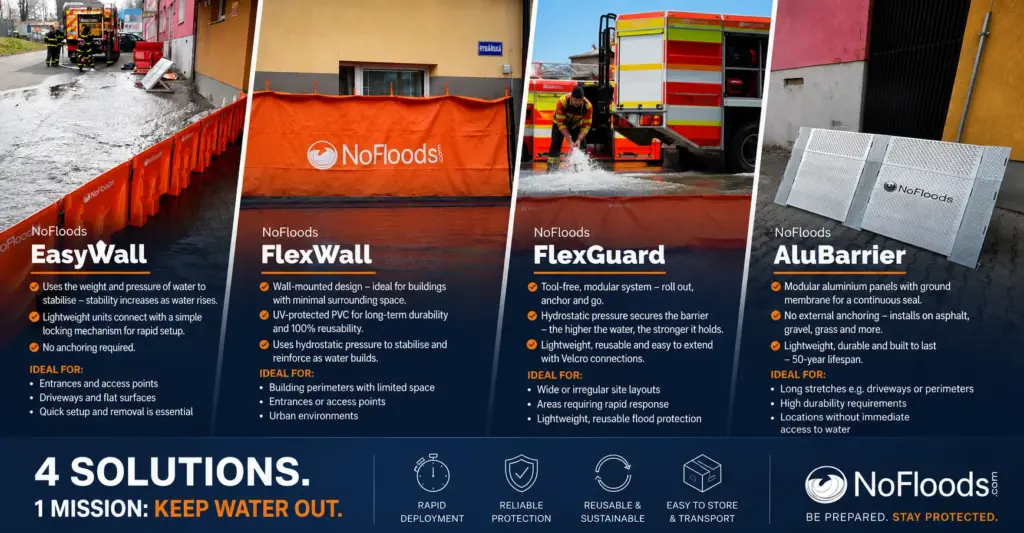
The demonstration was conducted alongside the Moravian-Silesian Region Fire and Rescue Service (HZS MSK), at the care home’s complex.
Four types of our stormwater barriers were put to the test:
1. NoFloods EasyWall
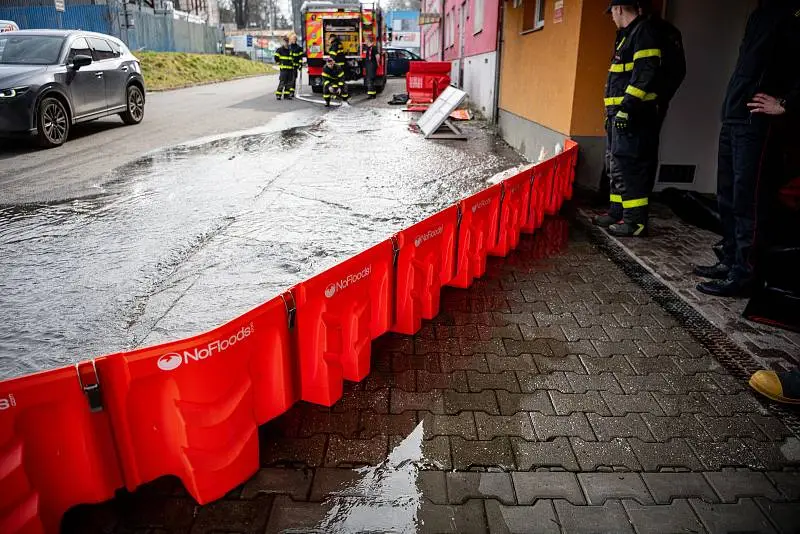
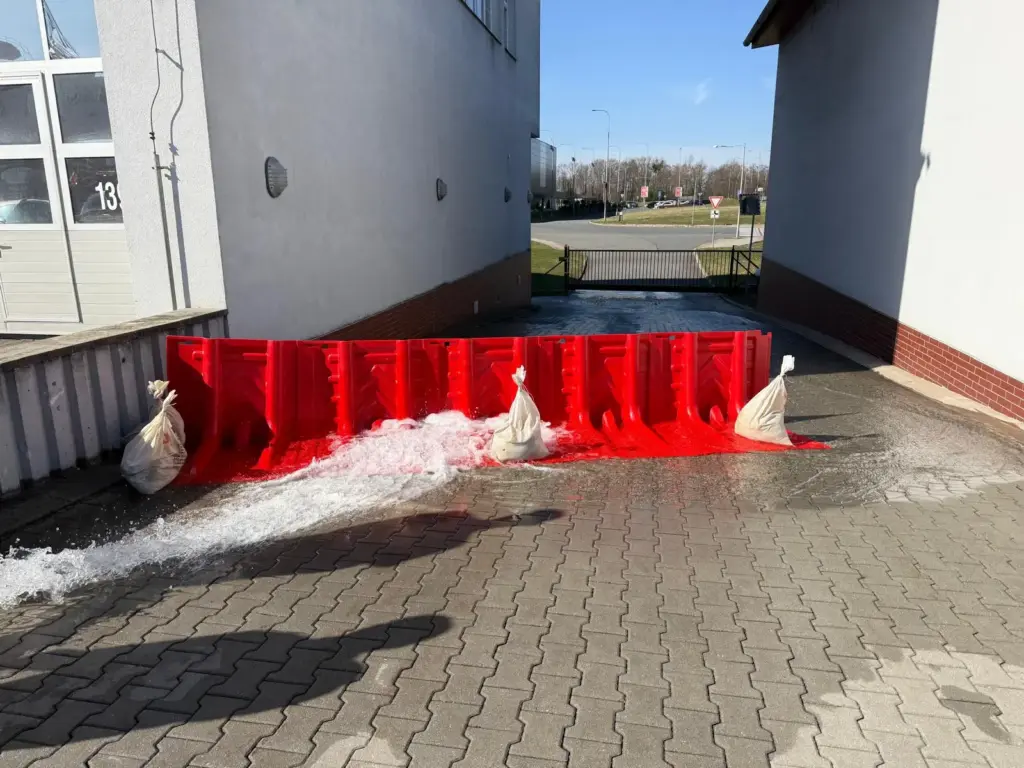
EasyWall uses the weight and pressure of the water to stabilize the barrier, so as water builds up, stability increases. No anchoring is required.
Each lightweight unit connects to the next through a simple locking mechanism, allowing teams to quickly build a continuous protective barrier.
EasyWall is particularly suited for:
- Entrances and access points
- Driveways and flat surfaces
- Areas where quick setup and removal are essential
During testing, EasyWall adapted well to the driveway and entrance geometry, demonstrating fast assembly and flexibility for site-specific needs.
Its lightweight design also meant that it could be handled and positioned without specialised equipment, which is critical in environments where staff need to act quickly.
Overall, the EasyWall system demonstrated how modular water runoff control products can offer a practical alternative to sandbags by combining speed, reusability and ease of handling in a way that aligns with the operational needs of the care home.
2. NoFloods FlexWall
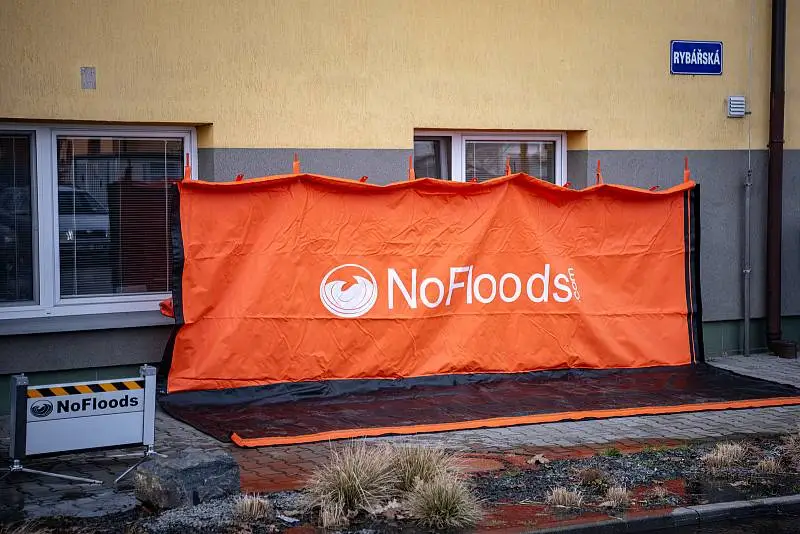
Unlike freestanding barriers, the FlexWall is a wall-mounted flood barrier, making it the perfect solution for buildings with minimal space around them.
Made from high-quality UV-protected PVC, it’s built for long-term durability and is 100% reusable.
Once deployed, a ground membrane is extended outward and weighted, while the barrier itself is supported by the wall behind it.
As water builds up, the system uses hydrostatic pressure to stabilise and reinforce the barrier, helping it maintain its position.
FlexWall is particularly suited for:
- Building perimeters with limited space
- Entrances or access points where a compact footprint is required
- Urban environments where permanent structures are not practical
During the test, the main advantage observed was its space efficiency.
Because the barrier sits directly against the building, it takes up less space compared to freestanding barriers, an important advantage in tight access areas.
3. NoFloods FlexGuard
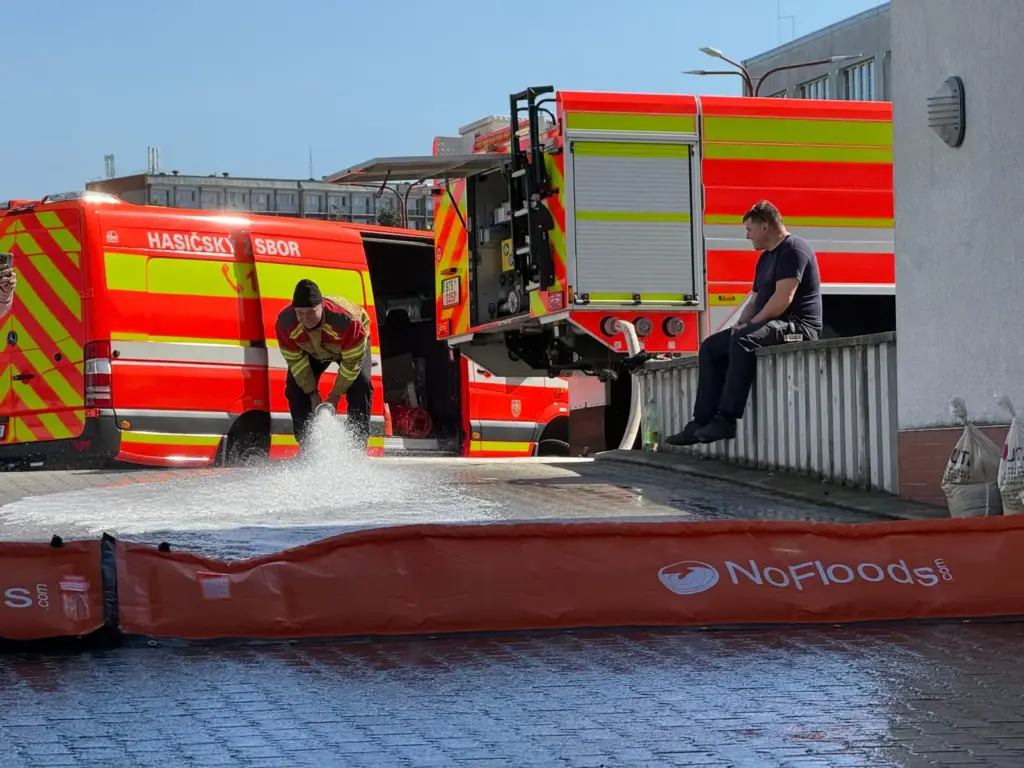
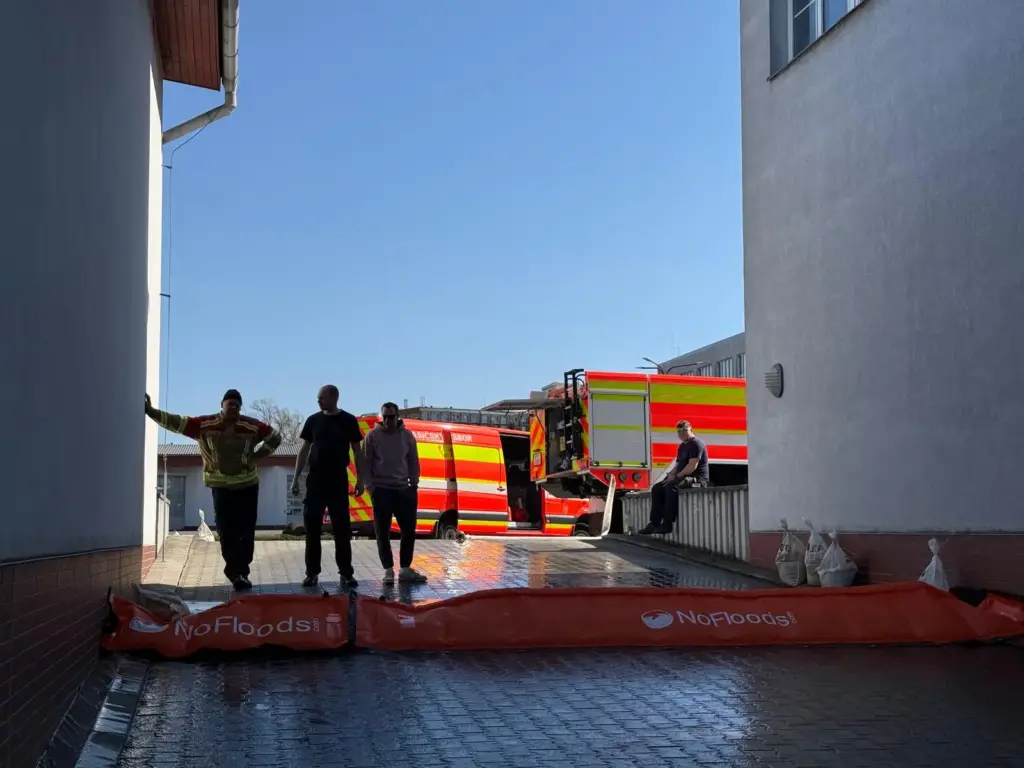
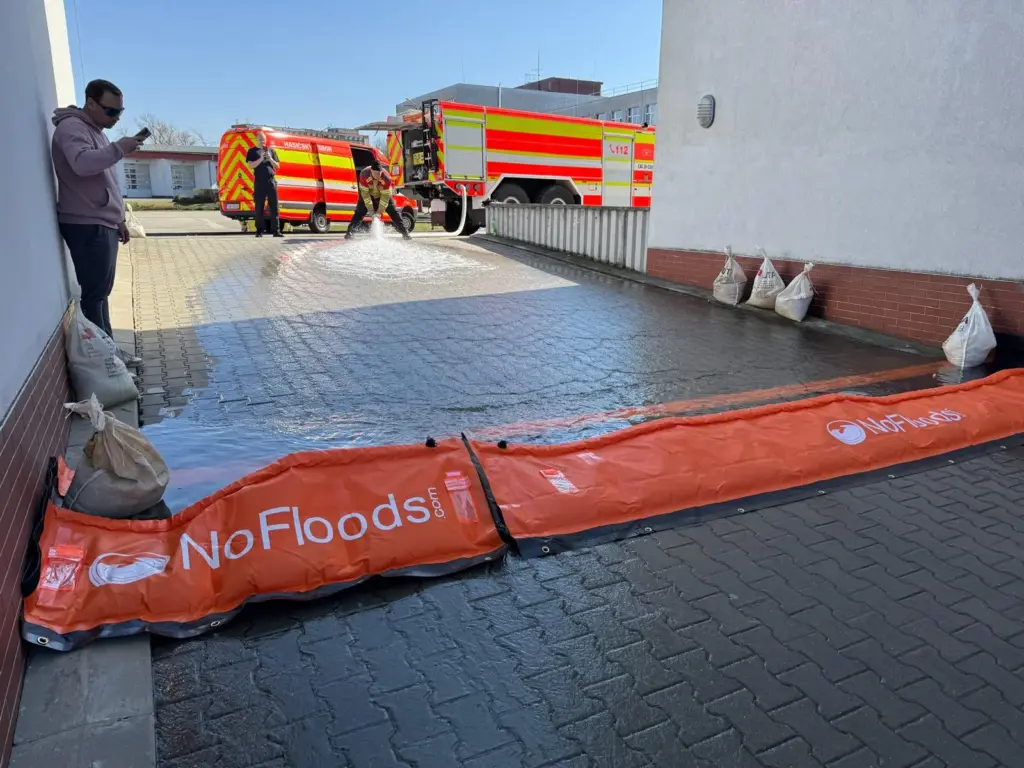
FlexGuard is a tool‑free, modular water‑barrier system that can be rolled out and positioned along the flow path.
It is anchored in place and held firm by the pressure of the floodwater itself. As water height increases, it adds pressure to both the base and the vertical wall, further securing the barrier in place.
FlexGuard is particularly suited for:
- Wide or irregular site layouts
- Areas where rapid response is essential
- Sites requiring lightweight and reusable flood barriers.
During the test, FlexGuard was easy to deploy, requiring minimal manpower and no tools (one person can deploy over short distances)
Its modular design allowed the barrier to be extended using velcro connection strips, making it adaptable to the natural contours of the street.
The low storage footprint and ability to roll the system back up after use stood out as a key benefit.
Overall, FlexGuard demonstrated how water runoff control products can be both simple and effective, combining rapid deployment, adaptability and reusability in a way that supports quick action without tools.
4. NoFloods AluBarrier
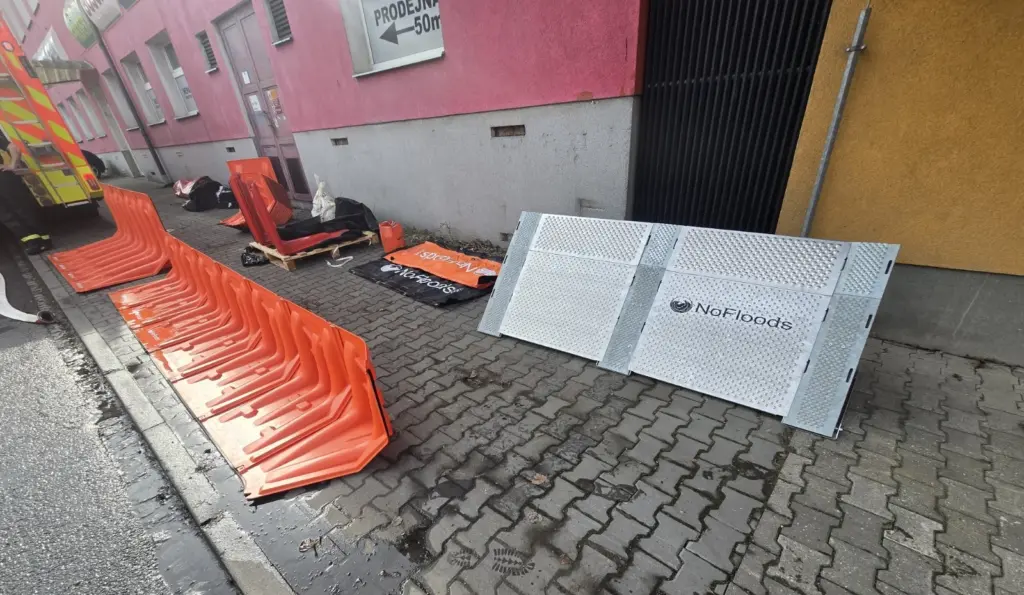
The AluBarrier is a modular panel system, made up of lightweight aluminium sections supported by leg structures.
Once assembled, a waterproof membrane is attached and extended along the ground on the water-facing side, creating a continuous seal that helps prevent water from passing underneath.
The system does not rely on external anchoring and can be installed on a variety of surfaces, including asphalt, gravel and grass, making it adaptable to different site conditions.
AluBarrier is particularly suited for:
- Protecting long stretches e.g. driveways or site perimeters.
- Areas where a higher level of durability is required (it has a 50-year lifespan)
- Locations without immediate access to water (unlike water-filled systems)
During the test, the AluBarrier stood out for its structural strength and stability.
Here’s a video of the demo:
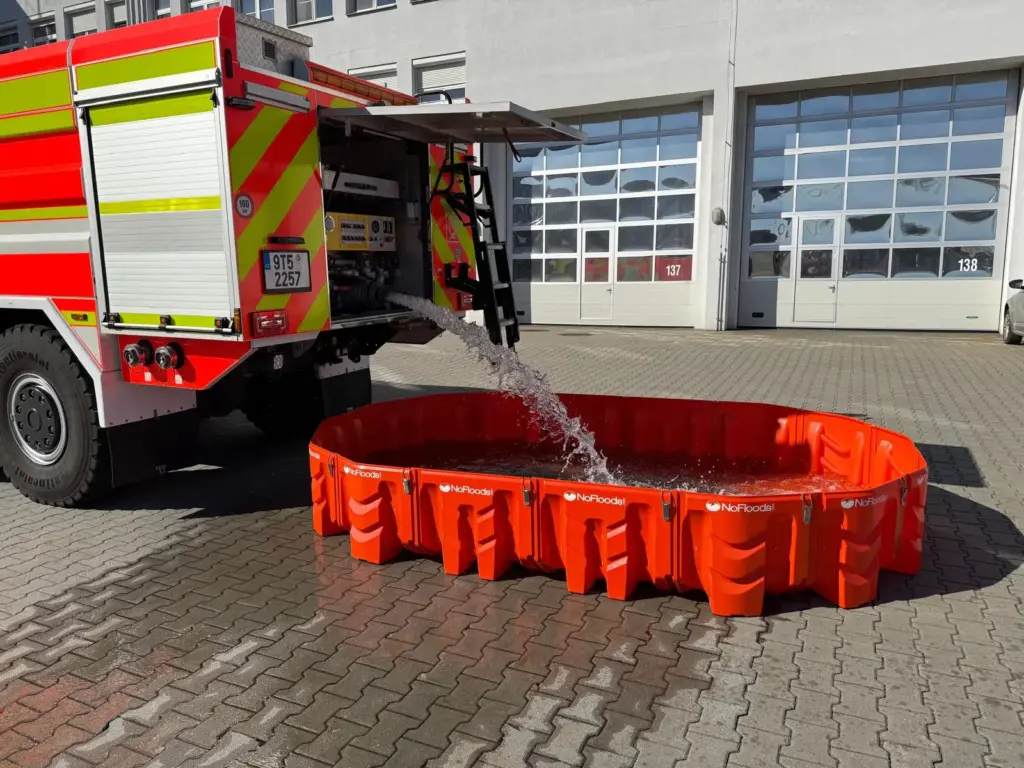
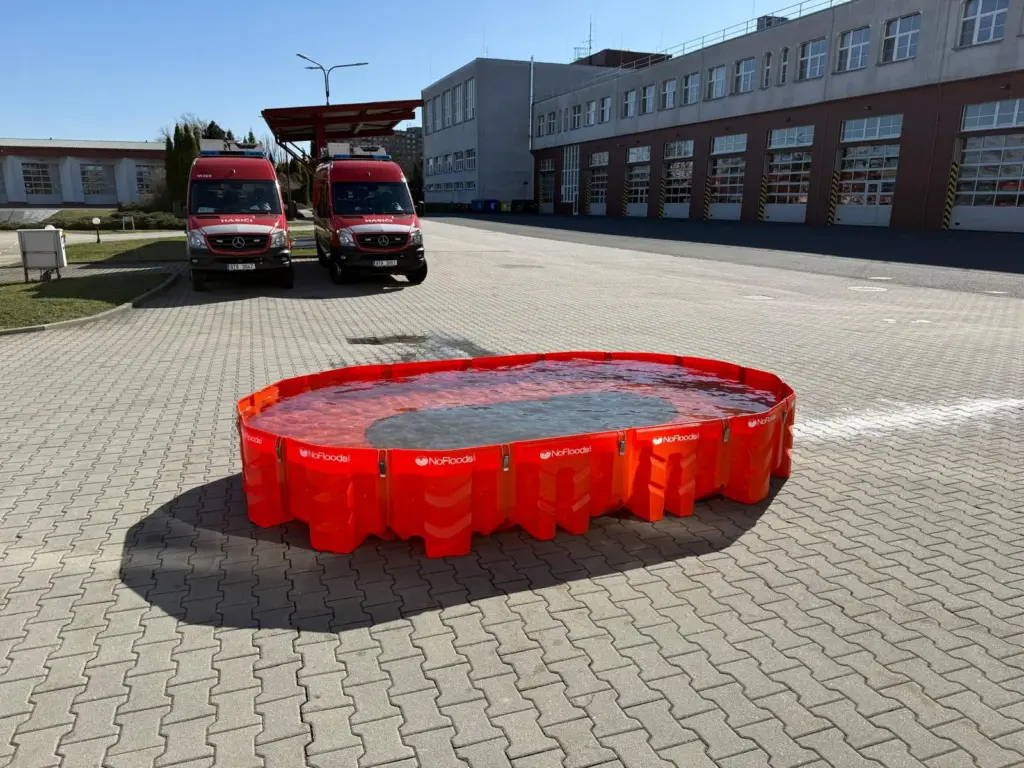
And here are a couple of pictures:
From Testing to Decision – What Happens Next?
The care home’s management will assess each water runoff control system on how it performed. They will look at the ease of deployment, adaptability to the site layout and suitability for their staff to operate independently.
The goal is to select a solution that not only provides reliable protection but also offers the best balance of effectiveness and cost-efficiency.
This evidence-based approach ensures that decisions are grounded in practical experience rather than marketing claims or assumptions.
Timing is also critical. By evaluating the options now, the care home aims to have the chosen system in place before the rainy season.
This proactive approach will allow staff to become familiar with the equipment and ensure the facility is prepared before the next summer storm season.
What Facilities Like This Should Look For in Water Runoff Control Products
For care homes, schools or other facilities facing recurring runoff challenges, selecting the right system goes beyond just buying a stormwater barrier.
Based on the care home’s tests, there are several key factors to consider:
1. Mobility and Ease of Deployment
Staff should be able to install and remove the barrier quickly, without relying on specialised tools or outside help.
Mobile systems allow a fast response during sudden heavy rain.
2. Suitability for Site Layout
The barrier should fit the specific contours and access points of the property. Modular or flexible systems can adapt to driveways, entrances and other irregular spaces.
3. Minimal Disruption to Operations
Solutions should not interfere with daily activities. Systems that require structural modifications or lengthy installation can disrupt essential services such as kitchens, storage and patient care.
4. Durability and Reliability
Materials and construction should withstand repeated use and exposure to water, while maintaining stability during deployment.
5. Cost-Effectiveness
Consider both upfront investment and long-term usability. Reusable, easy-to-store systems often provide greater value than temporary, single-use solutions like sandbags.
6. Evidence-Based Performance
Whenever possible, test the products under conditions similar to the site’s environment.
Observing how a barrier performs in practice rather than relying solely on brochures helps ensure the solution meets real-world needs.
By focusing on these criteria, facility managers can make informed decisions and confidently invest in water runoff control products that protect their property, staff and residents.
The Case for Testing Before You Buy
This demonstration highlights a simple but powerful lesson:
Seeing a product in action on your own site is far more valuable than relying on brochures or assumptions.
By testing a range of water runoff control products under real conditions, the care home gained a clear understanding of what works best for its unique challenges.
Whether it’s modular walls or aluminium panels, the right solution balances speed, adaptability and operational practicality.
Mobile systems in particular proved how quickly staff can respond without disrupting daily operations, a key consideration for senior care facilities.
Looking ahead, the care home will use the results from the demonstration to select the most suitable and cost-effective solution before the next summer storm season.
This case study also serves as a practical reference for other facilities facing similar runoff challenges.
By combining careful planning, evidence-based testing and the right technology, it’s possible to move beyond reactive approaches like sandbags and implement solutions that are easy, reliable and effective.
Special thanks to Luing Pyrex, our partner in the Czech Republic, for facilitating the live demonstration. Their expertise helped turn testing into actionable insight for the care home.