
Portable Water Dam Safeguards Wetland During Dam Renovation
A portable water dam is a temporary mobile barrier designed to contain, control or divert water for various purposes. Unlike permanent flood defences, these systems are built for rapid deployment and easy removal, making them perfect for situations where water needs to be managed quickly and efficiently.
A portable water dam was crucial for one of the world’s leading steel and mining companies as they needed to renovate a dam located in a wetland area.
They partnered with our distributor, Udim, who provided the water-filled dam to protect the wetland during the renovation.
Our in-house expert was on-site, providing support and expertise during the deployment of the water dam.
Everything was successfully executed thanks to a great team effort by everyone involved. Bravo!
Here are the project highlights.
The Challenge: Reducing Water At The Construction Site Without Interfering With The Wetland
The engineers had to perform a major renovation of a permanent dam located in the wetland area.
However, reducing the lake’s water level would negatively impact the protected wetland area and its entire ecosystem.
This meant that the wetland area had to be first secured before reducing the water level in the lake.
The Solution: NoFloods Portable Water Dam
After consultations, we decided to use our portable water-filled dam to help dam the wetland area.
This would ensure its water level was maintained throughout the project, which would last for months.
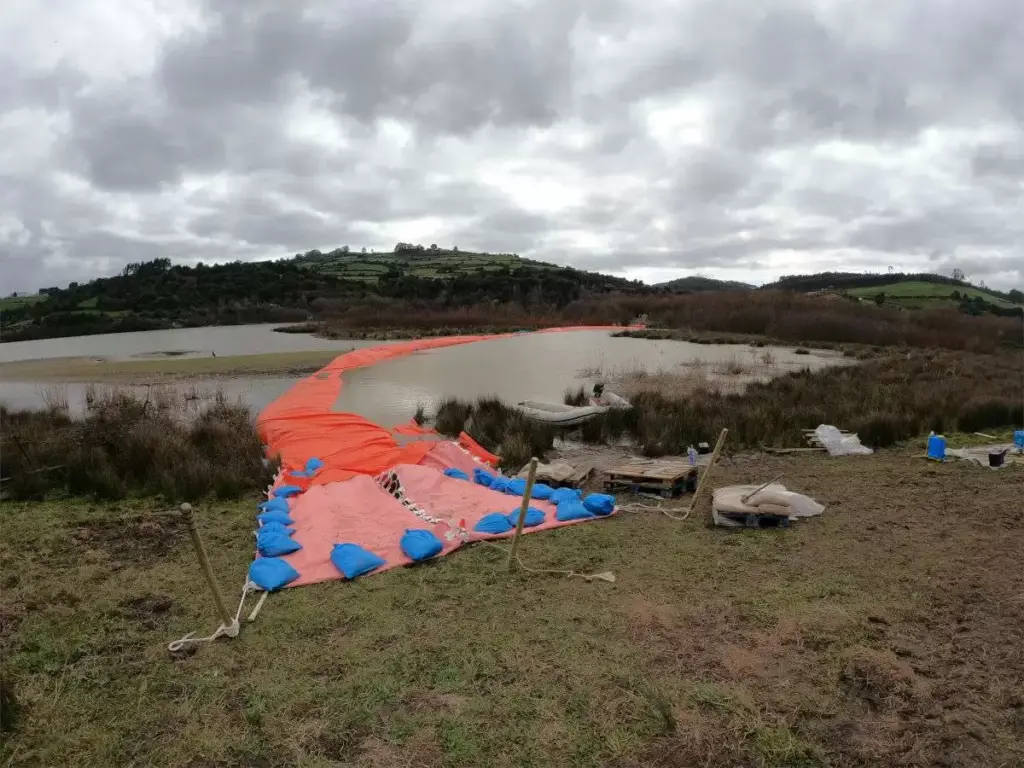
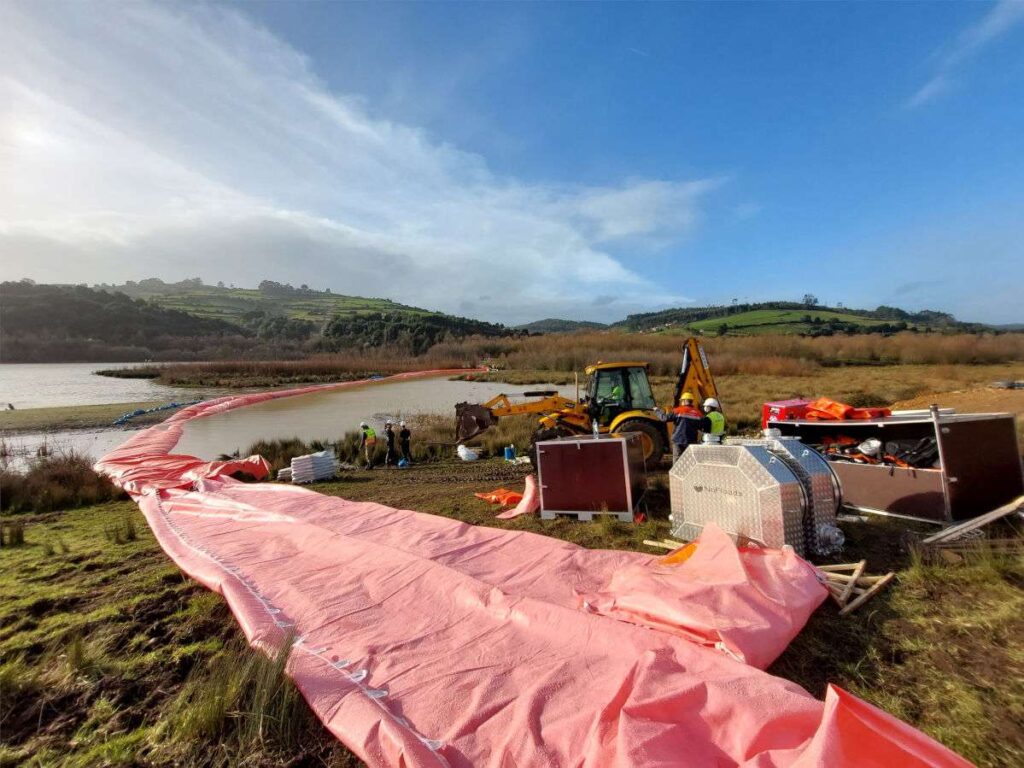
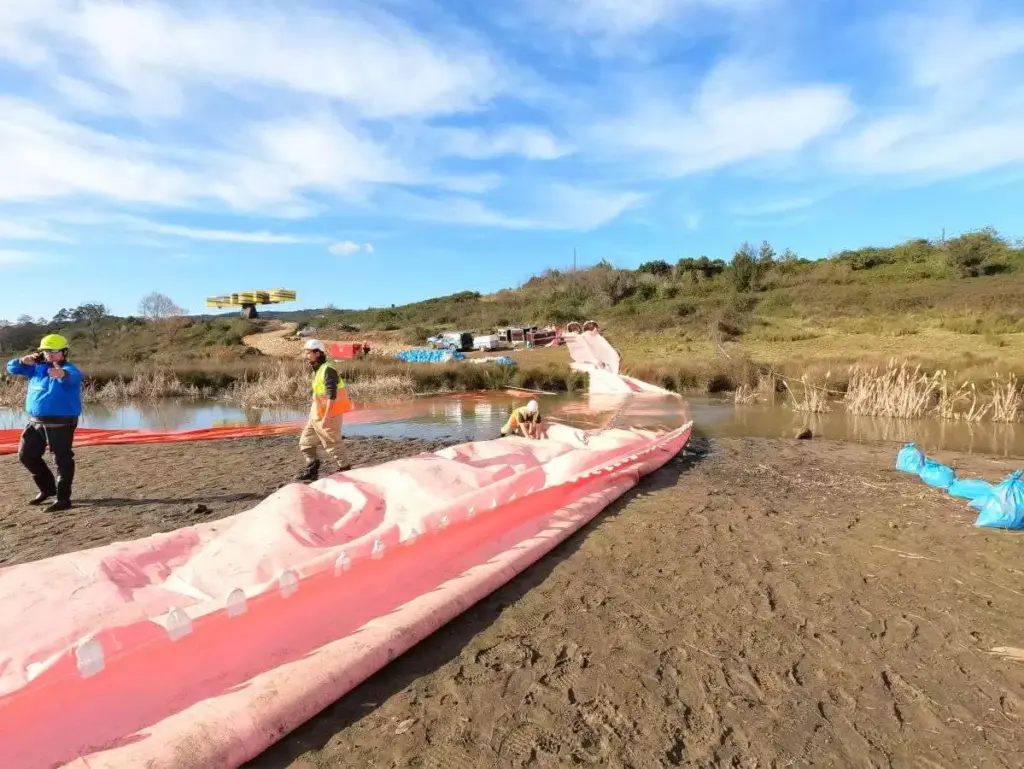
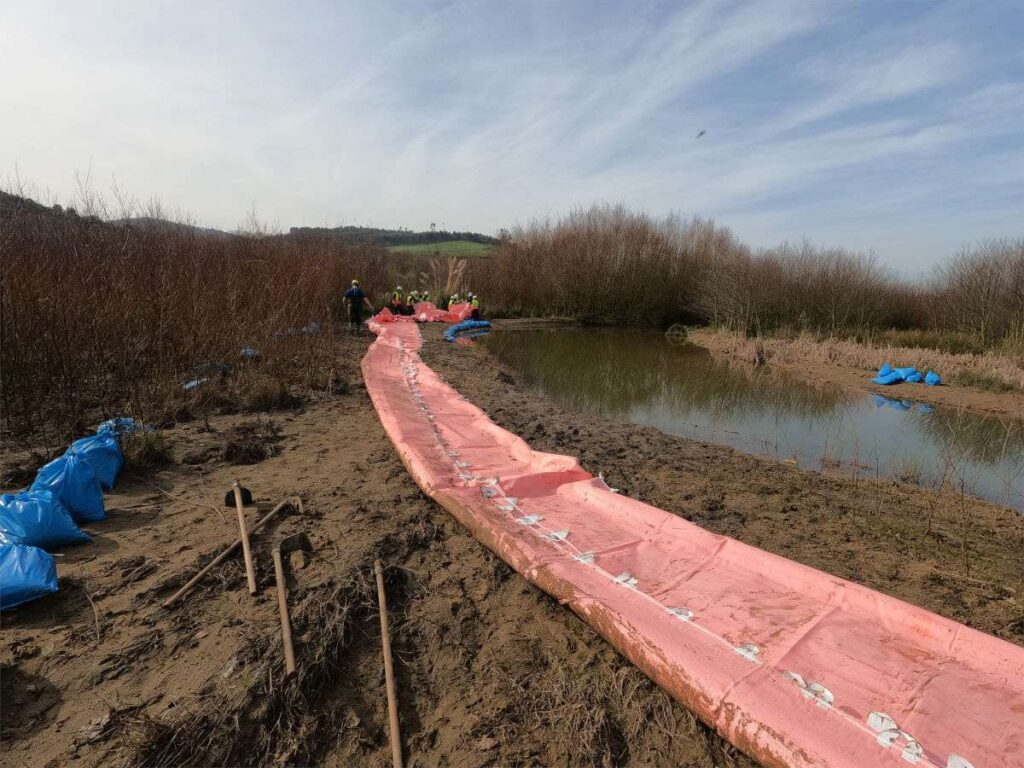
To this effect, a 200-meter (656-foot) inflatable water dam (NoFloods TubeBarrier PRO) was deployed across the lake to dam up the water flow.
Subsequently, a membrane was deployed over the NoFloods dam. Its purpose was to:
- Minimise seepage
- Stabilize the inflatable water dam
- Enable overtopping
- Protect the tubes against ultraviolet radiation (UV) during long-term use.
Smaller streams in the area were dammed up using our NoFloods FlexGuard (a self-erecting barrier) and another inflatable water dam.
The latter barriers for the smaller streams were deployed for short-term use and later removed.
The Result of Using The NoFloods Portable Water Dam
The subcontractor was able to embark on the renovation of the permanent dam while maintaining the water level of the wetland area.
This ensured that the wetland remained undisturbed even as construction work continued a few meters away.
Here are a couple of pictures of how the NoFloods portable dam was deployed.
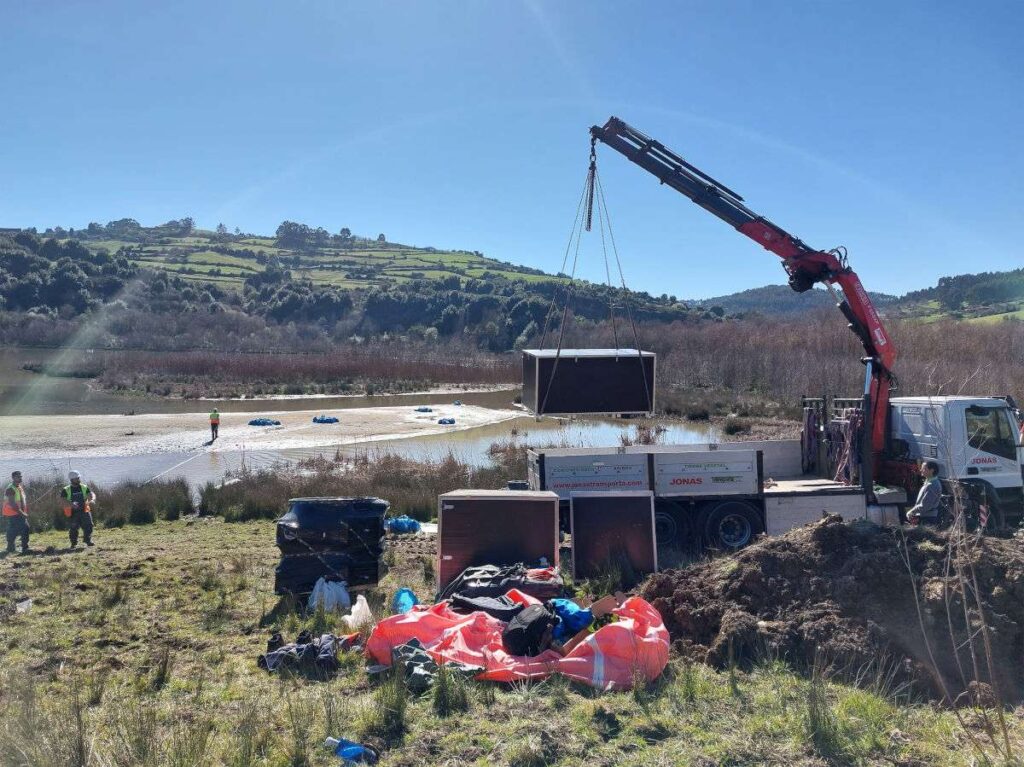
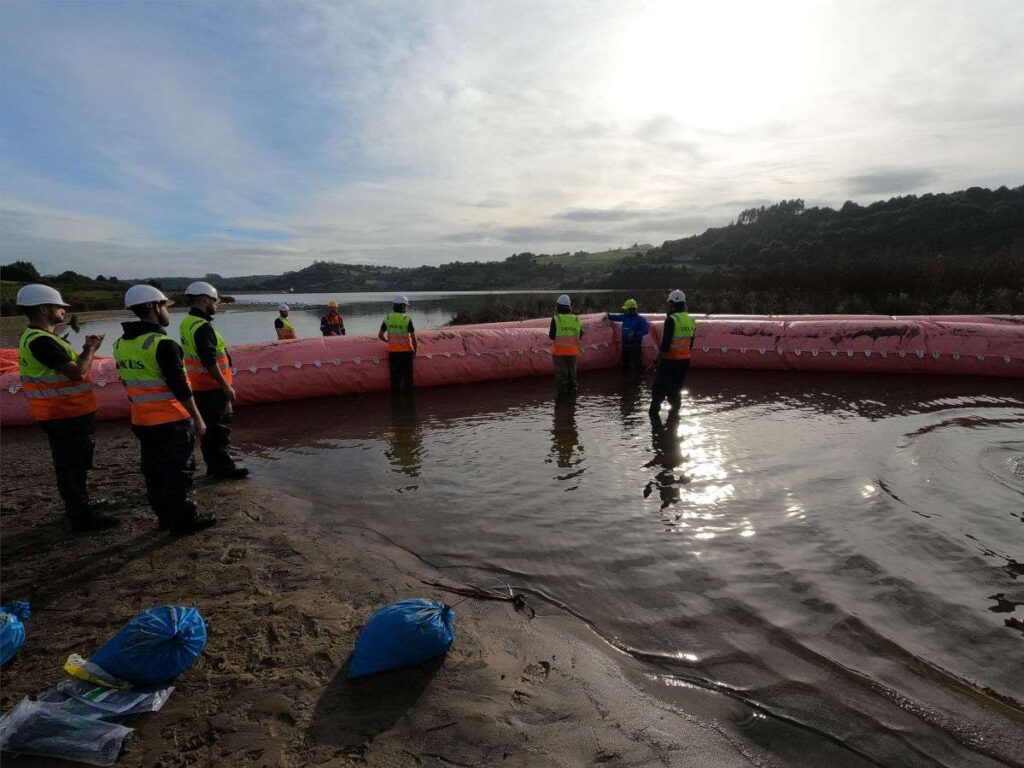
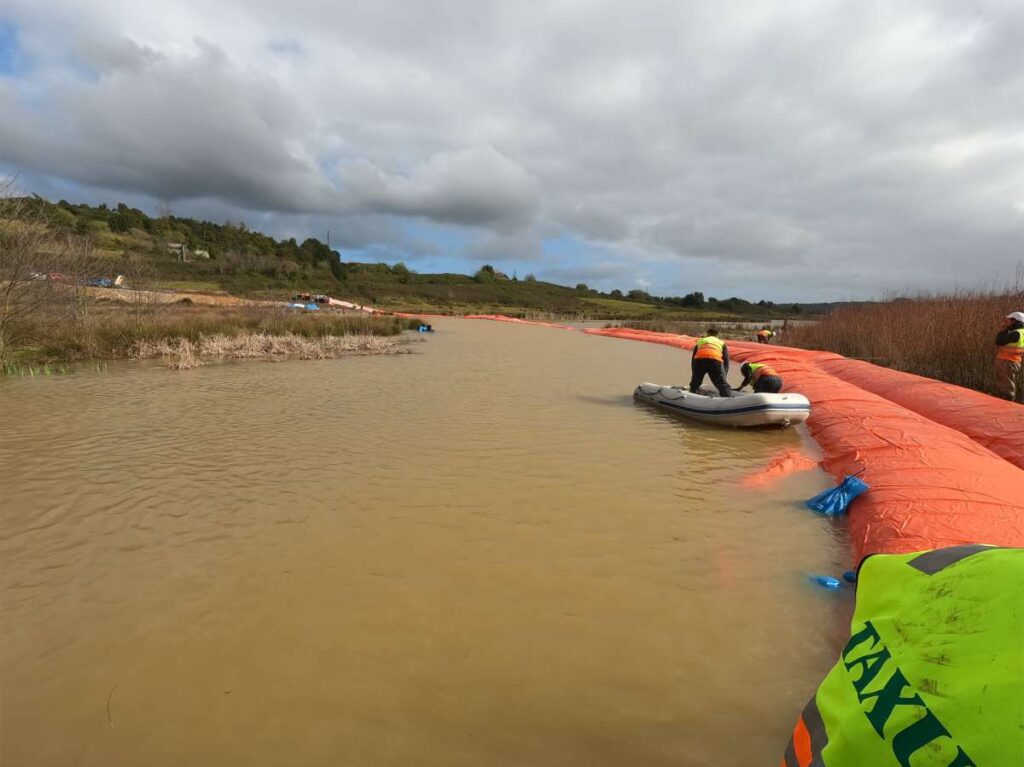
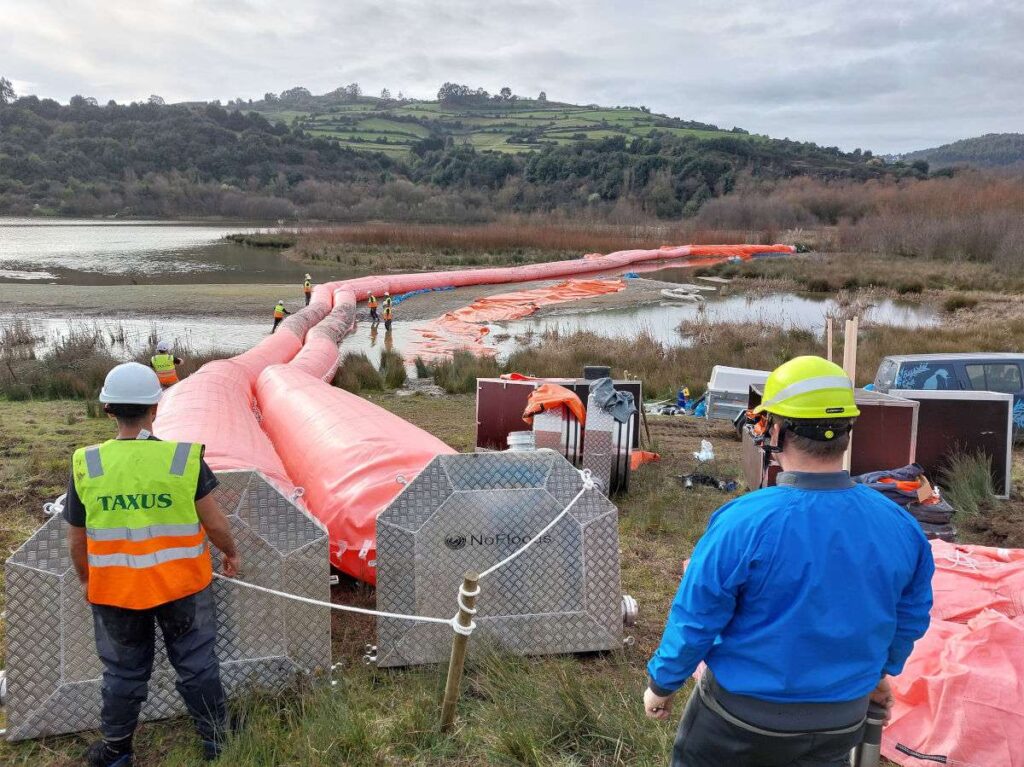
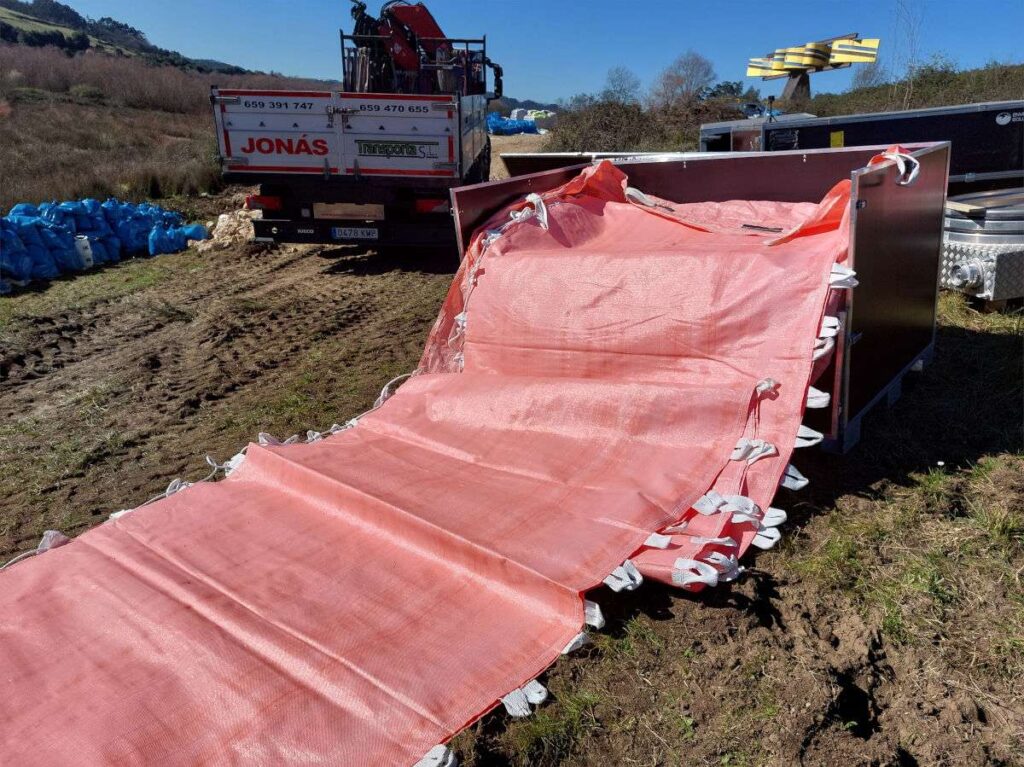
And here are videos of the same.
Working near a sensitive environment or protected ecosystem? Contact our team today to find out how our portable dam can help.
What You Need To Know About the NoFloods Portable Water-Filled Dam
The NoFloods portable water dam has multiple applications ranging from dewatering construction sites to safeguarding the environment, critical infrastructure and people during floods.
The TwinTube 125 has a pre-water weight of about 3 kg/meter. But this changes to 2350 kg/meter once filled with water.
The portable dam typically retains water up to 2/3 of the installed height once filled with water.
Adding a membrane decreases buoyancy. In practice, this means less seepage and increased protection height (the protection height equals the installed height of the barrier).
The NoFloods Barrier by Environment Solutions is one of the pioneers in the industry, with its proven technology dating back to 1999.
The concept is still new to the market but has a lot of potential.
Benefits of Using the NoFloods Water Dam
Quick setup and removal: It can be deployed and dismantled rapidly, making it ideal for urgent situations.
Reusability: It can be reused, offering a cost-effective and sustainable solution.
Versatility: Water dams can be used for flood control, construction projects, irrigation and other water management needs.
Adaptability: It can be deployed wherever needed, providing flexible water control solutions during construction, heavy rains or emergencies.
Efficiency: Easy to set up, saving time and labour compared to traditional methods.
Sustainability: Its reusability and efficiency contribute to environmentally friendly practices.
Support for agriculture: It can aid farmers in storing and distributing rainwater, benefiting both short-term flood control and long-term water resource management.
Cost-effectiveness: Since it’s reusable and requires fewer resources and manpower to deploy, the NoFloods water dam reduces the overall cost of water management e.g. during construction or flood control.
Minimal environmental impact: Unlike permanent structures, portable dams cause less disruption to ecosystems, making them ideal for projects where environmental preservation is a priority.
Customizable and scalable: Our portable dam can be adapted in size and shape to fit your specific needs e.g. you can have either a large temporary water dam or a small temporary water dam.
Easy storage and transport: Our portable water-filled dams are lightweight and collapsible, making them easy to store and transport to different locations as needed.
Frequently Asked Questions
How does our NoFloods portable water dam work?
Position the barrier: Set up the barrier at the location where water needs to be controlled or diverted e.g. in our case study, it was deployed across a wetland (see the photos).
Inflate the barrier with air: Use a pump to fill the barrier with air, allowing it to take shape and position itself.
Fill the barrier with water: Next, use a water pump to fill the barrier with the surrounding water e.g. in our case, water from the wetland was pumped into the barrier.
Once filled, the dam forms a solid wall that stops water from passing through or redirects it to another area as required.
By filling the barrier with water, it becomes heavy, sturdy and resistant to wind or water currents, ensuring it stays in place under various conditions.
And that’s it – a quick, simple and highly effective solution for water control.
What are the various uses of a portable water-filled dam?
Flood control: To prevent or minimize flooding in areas prone to heavy rains or sudden water surges by creating temporary water-filled barriers.
Emergency response: To quickly contain or redirect water during natural disasters or unforeseen events, protecting communities and infrastructure.
Creating cofferdams in construction: To create a dry work area within a body of water to enable construction, maintenance or repair of permanent dams, bridges or other infrastructure. It can also be used to control water flow during construction.
Irrigation: To temporarily store or redirect water for agricultural purposes, helping farmers manage water supply during dry periods.
Wetland and ecosystem protection: To safeguard sensitive environments by controlling water levels and preventing damage from floods or construction activities.
Landscaping and erosion control: To prevent soil erosion by managing water flow in landscaping projects and protecting newly planted areas.
Recreation: To create temporary water barriers for recreational activities like boating or fishing, especially in areas where water levels need to be controlled.
Temporary Water Storage: To hold water temporarily for various needs, such as filling pools, ponds or reservoirs for short-term use.
More Applications Of The NoFloods Barriers
- River diversion
- Culverting
- Cable and Pipeline works
- Boat ramp repairs
The NoFloods barriers have been used for different applications in the USA, France, Germany, Thailand, Australia, Spain, Serbia, Romania Slovenia, Sweden, Denmark, Italy, Hungary, Holland and 10 other countries.
Working near a sensitive environment or protected ecosystem? Contact our team today to find out how our portable dam can help.